

Look, if you’ve been paying attention to the tech world lately, the US AI investment boom is everywhere—it’s like that one friend who suddenly gets super into fitness and drags everyone along. By 2026, this surge isn’t just hype; it’s genuinely lifting the US economy in ways we haven’t seen since the dot-com days, but hopefully without the crash. Projections show AI-related spending could top $500 billion this year alone, pumping fresh energy into growth, jobs, and innovation. Sure, it’s not all smooth sailing, but the momentum from big players like Microsoft and Nvidia is hard to ignore. Let’s break it down.
Table of Contents
The Surge in AI Investments
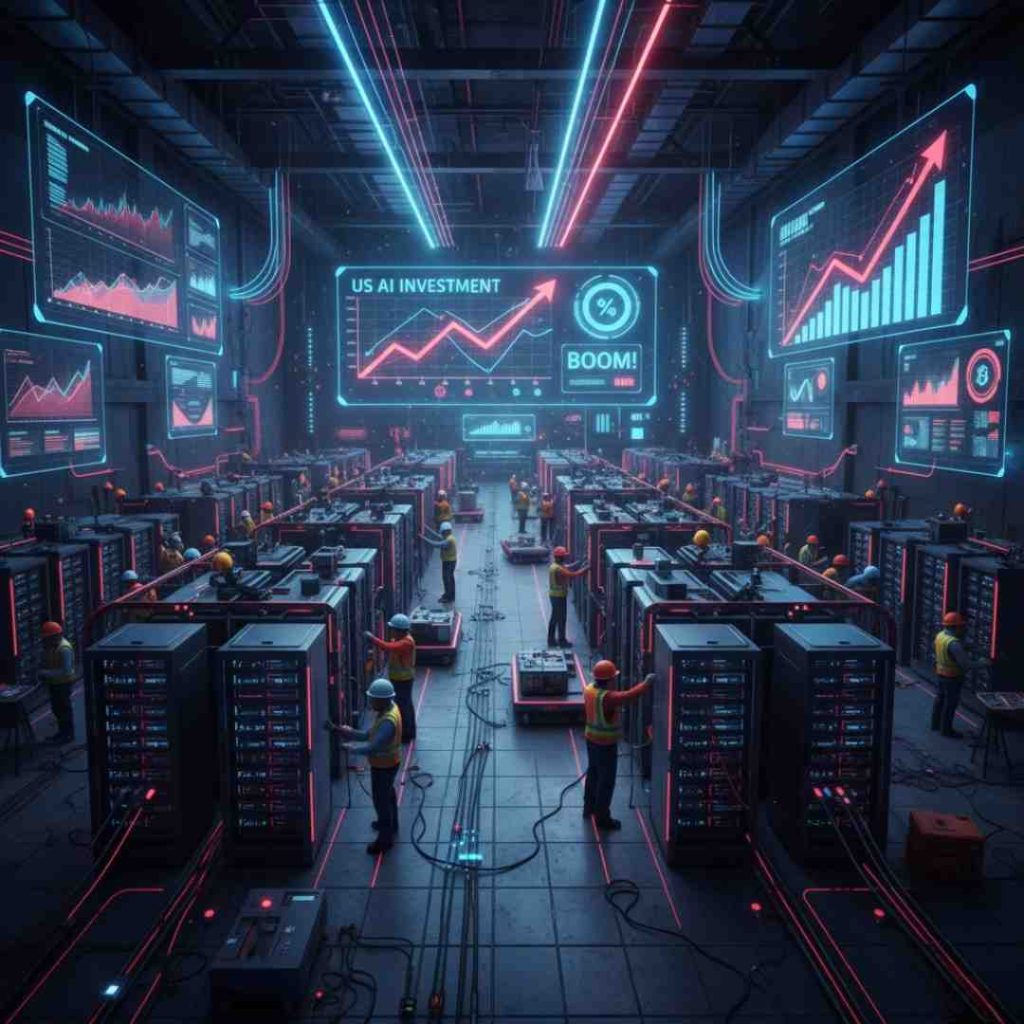
The US AI investment boom kicked into high gear back in 2025, and by 2026, it’s clear this isn’t slowing down. Companies are pouring cash into data centers, chips, and software like there’s no tomorrow. Think about it: hyperscalers—those massive tech firms—are expected to shell out over $500 billion just this year on AI infrastructure. That’s roughly the GDP of a mid-sized country, all funneled into building the backbone for smarter machines.
It’s not just the tech giants either. Investments are spilling over into energy, construction, and even manufacturing. I remember chatting with a buddy in Virginia last year who said data center builds were popping up like weeds, creating all sorts of local buzz. And the numbers back it up—cumulative AI spending might hit 10% of US GDP by the end of the decade.
Key Figures and Projections
Here’s a quick snapshot in a table to make sense of the scale:
| Year | AI Investment Estimate | Source Projection |
|---|---|---|
| 2025 | $370 billion (capex by top firms) | Company reports from Microsoft, Alphabet, Meta, Amazon |
| 2026 | Over $500 billion | Goldman Sachs forecasts |
| 2027 | Up to $2.1 trillion committed (cumulative) | Vanguard analysis |
These figures aren’t pulled from thin air; they’re based on real commitments from firms racing to scale AI. For a deeper dive, check out this YouTube video from Goldman Sachs on AI’s economic ripple effects: video
Boosting GDP and Productivity
One of the biggest wins from the US AI investment boom? It’s straight-up juicing GDP. In 2025, AI capex alone chipped in about 1% to overall growth, and forecasts for 2026 peg US GDP expansion at around 2.4% to 2.6%—that’s above what most economists expected a year ago. Banks like BofA and Goldman are calling it: AI is the secret sauce keeping things humming despite trade hiccups and inflation worries.
Productivity is the real game-changer here. AI tools are automating routine tasks, freeing up folks to tackle bigger problems. Vanguard’s take is that by 2028, AI could handle 7.5% to 15% of work hours, leading to longer-term GDP bumps up to 3%. It’s like giving the economy a caffeine shot—slow at first, but once it hits, watch out.
Direct Contributions to Growth
- Short-term lift: AI investments added $250 billion to GDP since 2022, with more coming in 2026 from infrastructure builds.
- Sector spillover: The info and comms sector drove half of 2025’s growth, and that’s carrying over.
- Longer view: Could shave $400 billion off deficits through 2035 by boosting efficiency.
But hey, it’s not all numbers—I’ve seen small businesses using AI for inventory that used to take hours, now done in minutes. That kind of edge adds up across the board.
Job Creation and Sector Impacts
Okay, the job side of the US AI investment boom is a mixed bag, but mostly positive so far. Sure, some roles get automated, but new ones are sprouting in droves. Data centers alone are creating thousands of construction and tech jobs, especially in places like Texas and Arizona. Barclays notes this capex cycle is the biggest in decades, rivaling the ’90s telecom rush, and it’s fueling employment in power grids and networking too.
In healthcare and finance, AI’s making waves—think faster diagnostics or fraud detection. A friend in banking told me their team cut processing time by half with AI, letting them handle more clients without hiring extras. Overall, 57% of forecasters say AI’s already hiking productivity, which could mean more jobs long-term as companies expand.
Emerging Opportunities
Top companies leading the charge:
- Nvidia: Dominating chips, with stock surges tied to AI demand.
- Microsoft and Alphabet: Heavy investors in cloud AI, boosting their earnings.
- Meta and Amazon: Pouring billions into data centers.
For more on investing in these, see our guide on top AI stocks for growth.

Government Policies Fueling the Boom
The feds aren’t sitting this out. The US AI investment boom got a huge push from policies like the America’s AI Action Plan, rolled out in 2025. It’s all about cutting red tape, pumping funds into R&D, and building infrastructure to keep America ahead of China. Think streamlined permits for data centers and tax breaks for AI training—stuff that’s directly feeding economic growth.
Deregulation means faster builds, and workforce programs are prepping people for AI jobs. It’s worker-focused too, with hubs studying labor shifts to avoid big disruptions.
America’s AI Action Plan
Key pillars:
- Innovation acceleration: Ditching old regs and boosting open-source AI.
- Infrastructure build: Grid upgrades and secure data centers.
- Global leadership: Export controls and diplomacy to protect US tech.
This isn’t just talk; it’s already sparking more private investment. Check out government AI initiatives for details.
Challenges and Risks Ahead
Nobody’s saying the US AI investment boom is risk-free. There’s chatter about a bubble—Google’s boss even called parts of it “irrational”. If returns don’t match the hype, we could see a slowdown, hurting growth. Deutsche Bank warns that without guaranteed payoffs, GDP could falter if capex dries up.
Uneven adoption is another hitch; not every industry jumps on board fast. And jobs? While new ones pop up, some folks in routine roles might struggle. Plus, energy demands from data centers are straining grids, raising costs.
Potential Bubble Concerns
- Overinvestment: $2.1 trillion committed, but scrutiny on earnings.
- Market volatility: Tech stocks could dip if AI disappoints.
- Broader economy: If the boom stalls, traditional sectors might not pick up slack.
Still, most experts lean optimistic, saying real profits and adoption set this apart from past bubbles.
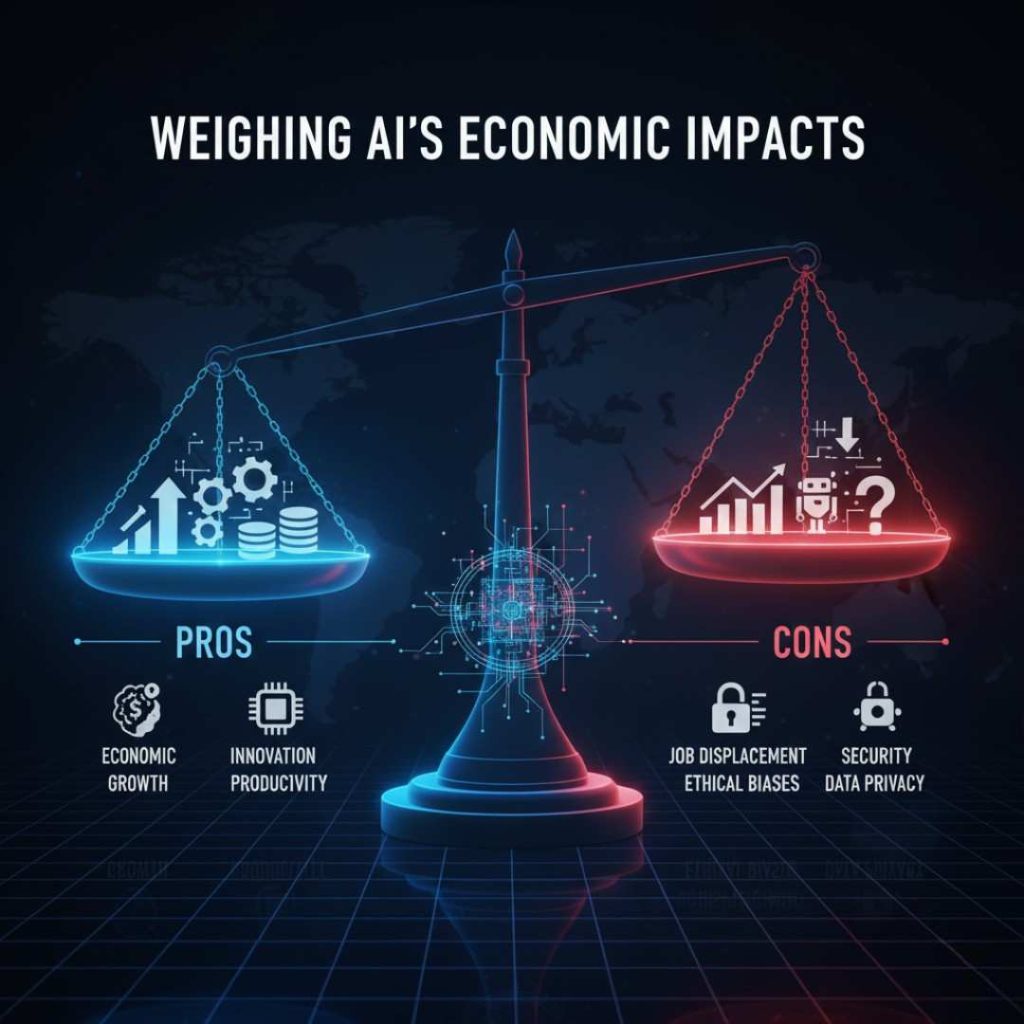
As we roll through 2026, the US AI investment boom feels like it’s just hitting its stride. It’s not perfect—nothing ever is—but the way it’s propping up growth, sparking jobs, and pushing innovation? That’s the kind of momentum that could define the decade. Keep an eye on those big tech moves; they might just shape your wallet too.
Key Takeaways
- The US AI investment boom is projected to exceed $500 billion in 2026, directly lifting GDP by around 1%.
- Top firms like Nvidia and Microsoft are leading, with spillover to energy and construction.
- Government policies are deregulating and funding to accelerate growth.
- Productivity gains could hit 3% long-term, but bubble risks loom.
- Jobs are shifting, with new opportunities in tech infrastructure.
FAQ
What’s driving the US AI investment boom in 2026?
Mostly massive capex from hyperscalers on data centers and chips, plus government pushes to stay ahead globally. It’s all about scaling AI for real-world use.
How much is the US AI investment boom adding to GDP this year?
Forecasts vary, but it’s around 1% directly from spending, with more from productivity. Overall growth could hit 2.4-2.6%.
Are there jobs lost due to the US AI investment boom?
Some routine tasks are automated, yeah, but new roles in AI buildout—like data center techs—are booming. Net positive so far, per most reports.
Is the US AI investment boom a bubble?
It has elements of hype, but unlike dot-com, there’s real adoption and profits. Still, if returns lag, it could pop—watch for that.
What government steps are supporting the US AI investment boom?
Things like the AI Action Plan, cutting regs and funding R&D to boost innovation and infrastructure.
How can everyday folks benefit from the US AI investment boom?
Invest in AI stocks, upskill in tech, or look for jobs in growing sectors. Even small businesses can use AI tools to cut costs.
Key Citations:
- Vanguard AI Exuberance Report
- Goldman Sachs AI Investment Projections
- BofA 2026 Economic Forecast
- Barclays Q1 2026 Outlook
- Goldman Sachs Global Economy Forecast
- White House America’s AI Action Plan
- J.P. Morgan AI Growth Insights
- Deutsche Bank GDP Analysis
- AI Magazine US Economy Dependence
- WIRED AI Data Center Boom