

You hear the stories all the time. Your neighbor’s aunt, who is usually sharp as a tack, somehow falls for a grandchild scam and wires $15,000 before she even realizes what happened. Or that email that looked so real—the bank logo, the urgent tone, the link you clicked without thinking. It happens to the best of us, and honestly, scammers are getting smarter every single day.
It’s scary out there in the digital Wild West. The problem used to be mostly weird emails from a “Nigerian Prince.” Now? It’s sophisticated, personalized stuff that feels incredibly real. Scammers aren’t just guessing anymore; they’re using technology—sometimes even basic AI tools—to make their cons far more convincing.
So the big question is: How do we fight back when scammers are using advanced tech themselves?
It might sound strange, but the best shield we have is the very technology they’re trying to exploit: artificial intelligence. Knowing how to protect your money using smart AI-powered tools is no longer optional—it’s an essential life skill in the 2020s.
This isn’t some distant sci-fi future. Banks, financial apps, and even simple tools you can download today are already using AI behind the scenes to flag suspicious activity before it empties your account.
Let’s break down how this works, what to watch for, and how AI can become the strongest defense your wallet has ever had.
How Banks Use AI to Fight Fraud (The Stuff You Don’t See)
Most of the time, AI is already protecting you—and you don’t even notice. Think about the last time your credit card company texted you after a purchase in another state. That was AI doing its job.
Banks process billions of transactions every day. No human team could manually check them in real-time. They need something faster.
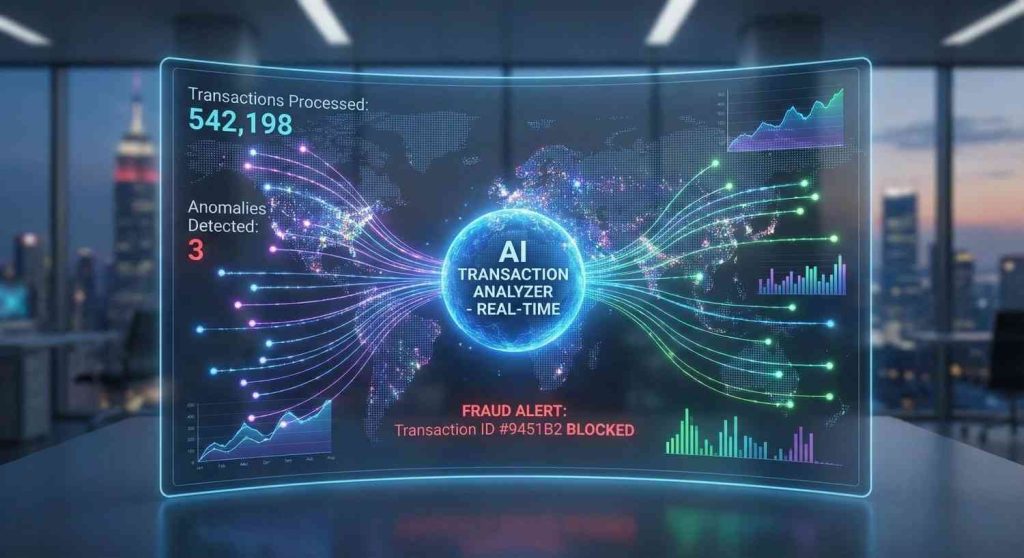
The “Normal Pattern” Analyzer
At the core of this protection is behavioral analytics. AI learns your unique spending habits:
- Your daily coffee shop purchase
- Your monthly electric bill on the 15th
- Your typical online shopping pattern
- The cities where you normally make purchases
Using this, AI builds a “financial fingerprint.”
So if someone tries to buy a $3,000 TV at 2 AM in Miami—but you live in Seattle and you’re asleep—the system flags it instantly.
That’s why you get those “Did you authorize this?” messages. Fast detection = instant fraud prevention.
Spotting Deepfakes and Voice Scams
The newest scams are downright terrifying. AI voice cloning is now so accurate that scammers can copy a friend or family member’s voice from a short online clip.
My cousin once got a call sounding exactly like his daughter crying and asking for money after a supposed accident. It almost worked.
Thankfully, security teams are developing AI that analyzes tiny voice details—tone, breathing patterns, digital distortions—that reveal whether it’s real or synthetic.
It’s an arms race, but the good guys are keeping pace.
Tools You Can Use Right Now to Protect Your Money
While banks are working hard, you also need to take protective steps. Your personal habits matter more than you think.
Smart Browser Extensions
AI-powered browser extensions are a quick win for everyday protection. These tools detect fake websites, malicious pages, or phishing attempts within seconds.
- They scan URLs
- Check site age
- Analyze website behavior
- Compare site code with known scam patterns
If something looks suspicious, the AI blocks it immediately.
Recommended: You can find trusted options through the official Cybersecurity & Infrastructure Security Agency (CISA) site.
Password Managers Are Non-Negotiable
These aren’t flashy AI tools, but they use powerful algorithms to create ultra-strong passwords.
Stop using your birthday or your pet’s name. Modern password-cracking AI can guess simple passwords in seconds.
Managers like 1Password or LastPass create 25-character secure passwords and store them safely.
This is the foundation of all online protection.
Your Human Intuition vs. AI Scams: The Partnership That Works
Technology can protect you—but it can’t override your emotions. Scammers use urgency, fear, and pressure to make you act without thinking.
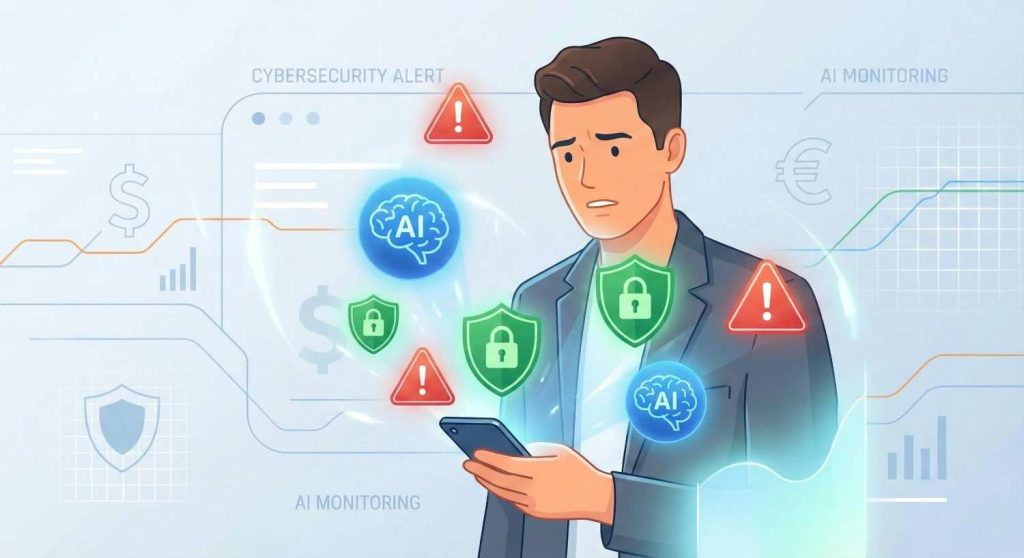
The “Pause Principle”
If someone pressures you to act right now—send money, click a link, share a code—take a pause.
Even the best AI can’t save you if you ignore warnings because you’re stressed.
Remember the basics:
- Never share one-time verification codes
- The IRS will never demand gift cards
- If a deal seems unrealistically good, it probably is
Your brain, combined with smart AI tools, makes a powerful defense.
Quick Red Flag Table
| Red Flag | Description | What to Do |
|---|---|---|
| Urgency/Pressure | “Act now or your account will be closed!” | Pause. Verify independently. |
| Weird Payment Method | Requests for Zelle, gift cards, crypto | Real businesses don’t ask this way. |
| Generic Greeting | “Dear Customer” instead of your name | Be skeptical. |
| Suspicious Email Address | support@bank-secure-login.com | Check the domain carefully. |
For a great breakdown, watch the FTC’s short video on modern scams on YouTube. It’s only 4 minutes but incredibly eye-opening.
What I Learned From My Own Close Call
From my own experience, the biggest wake-up call came when I almost clicked a fake delivery email that looked completely real. The only thing that saved me was a tiny warning from my browser extension. That moment made me realize how easy it is to slip up and how important it is to rely on both AI tools and my own instincts every day.
Key Takeaways
- Banks use AI behavioral analytics to detect strange activity in seconds.
- Voice recognition AI is fighting back against deepfake scam calls.
- Browser extensions + password managers are simple but powerful tools anyone can use.
- Human intuition still matters—AI supports your judgment, not replaces it.
Stay alert. With smart tech and a healthy dose of skepticism, you can keep your money safe.
FAQ Section
Q: Can AI stop every scam email?
A: No—scammers constantly change their tactics. AI filters help, but your judgment matters most.
Q: Are AI-powered money apps safe?
A: Mostly yes. Reputable apps use strong encryption. Download only from official app stores
Q: My dad isn’t tech-savvy. How can I help him?
A: Install a secure browser extension, enable bank notifications, and teach him the Pause Principle
Q: Are scammers using ChatGPT to write better scam emails?
A: Unfortunately, yes. Emails now look cleaner and more believable. That’s why combining AI tools with human awareness is essential.
Q: How do I know if a website is truly safe?
A: Always check the URL carefully—look for “https://” and a valid padlock icon. If anything looks off, like strange characters or misspellings, don’t enter your information. AI browser extensions can help flag suspicious sites automatically
Q: Can AI protect me from phone scams too?
A: AI is improving at detecting suspicious phone numbers and call patterns, but it can’t fully replace your judgment. Always pause, verify, and never give sensitive info over the phone unless you initiated the call.
Q: Should I use AI financial apps for budgeting?
A: Yes, they can help spot unusual spending and track your finances. Stick to apps from reputable companies, and double-check that they use strong encryption and proper security measures.
Q: Are public Wi-Fi networks safe for banking?
A: Generally, no. Public Wi-Fi can be hacked. Use a VPN if you must access banking apps or sensitive information outside of a secure network. AI can sometimes detect suspicious network activity but cannot fully prevent attacks on unsecured Wi-Fi.
Q: How can I teach my kids about online scams?
A: Start with simple rules: never share passwords, be skeptical of urgent messages, and double-check any online deal. Demonstrate using AI tools like browser extensions or security alerts, and discuss the “Pause Principle” together
Q: What’s the first step if I think I’ve been scammed?
A: Stop all transactions immediately, contact your bank or payment provider, and report the scam to the FTC. Use AI-powered monitoring tools to check for any unauthorized activity and secure your accounts with new passwords.