

Businesses today pretty much have to go digital if they want to stay in the game. It’s not just about having a website anymore—it’s about running smarter, moving faster, and really understanding your customers. And right now, artificial intelligence is the biggest tool making all of that happen. I’ve watched companies (big ones and small ones) completely change how they work once they started using AI the right way. It’s honestly kind of wild how much difference it can make.
What AI Actually Does in Digital Transformation
At its heart, AI just looks at tons of data, spots patterns we’d never catch on our own, and hands us insights we can actually use. It’s not magic. It’s math on steroids. But when you put it to work, it solves a bunch of old headaches: too much busywork, slow decisions, guessing what customers want, all that stuff starts to disappear.
Better Decisions, Less Guesswork
Remember when leaders had to make huge calls based on gut feelings and a couple of spreadsheets? Those days are fading fast. AI pulls information from sales, customer service tickets, social media, wherever—and shows you what’s really happening. I’ve seen marketing teams spot a drop in engagement two weeks before it would have hit the monthly report. That kind of heads-up lets you fix things before they turn into real problems.
Key ways AI sharpens decisions:
- Spots trends across massive data sets in seconds
- Flags risks most people would miss
- Gives you hard numbers instead of hunches
- Updates predictions in real time as new info comes in
Freeing People from Boring Work
Let’s be honest: nobody got into business to copy-paste data or approve the same expense report fifty times. AI eats those repetitive tasks for breakfast. Chatbots handle basic customer questions. Software approves routine purchases. Robots (the digital kind) reconcile invoices. Suddenly your team has hours back in their week to actually think, create, and solve real problems.
One company I know cut the time spent on monthly reporting from three days to about twenty minutes. Twenty minutes! The finance crew almost threw a party.
Creating Customer Experiences People Actually Love
Customers can tell when a company “gets” them. AI helps you listen at scale. It reads reviews, tracks clicks, watches how long someone lingers on a page, and figures out what they’re likely to buy next. Then it serves up the right offer at the right moment.
Think personalized product recommendations on Amazon, or Spotify nailing your weekend playlist. That’s AI doing its thing. When it’s done right, people don’t even notice the tech—they just feel like the brand really understands them.
Real-world wins I’ve seen:
- A retail chain cut cart abandonment 30% just by sending smarter reminder emails
- A bank reduced call-center volume because the app started answering questions before people
- picked up the phone
- A travel site boosted bookings 18% with personalized trip suggestions
Locking Down Data Like Never Before
The more digital you go, the bigger target you paint on your back. Cyberattacks aren’t rare anymore—they’re Tuesday. AI is like having a tireless security guard that never sleeps. It watches traffic on your network, spots weird patterns instantly, and can shut down threats before a human even finishes their coffee.
I talked to a CTO who said their old system flagged maybe 1 in 100 real attacks. After adding AI-driven monitoring? They went to catching 98 out of 100. That’s the kind of jump that keeps executives sleeping at night.
Speeding Up Innovation (A Lot)
Getting a new product or feature out used to take forever—months of testing, guessing, more testing. AI lets teams try ideas faster because it can predict how customers will react before you build the whole thing. It’s like having a crystal ball that actually works.
One software company I followed cut their release cycle from 90 days to two weeks. Customers loved getting new stuff faster, and the devs weren’t burned out anymore.
Team celebrating a successful product launch with high-fives
Check out this quick talk from Google’s CEO about how they use AI internally—it’s eye-opening:
Bringing Teams Together Instead of Siloing Them
Nothing kills momentum like “Wait, whose numbers are we using?” AI tools create a single source of truth everyone can see. Sales knows what marketing is running. Support sees the latest product bugs. Leadership gets the same dashboard. Projects stop getting stuck in email chains.
When everyone’s looking at the same real-time info, collaboration actually feels easy.
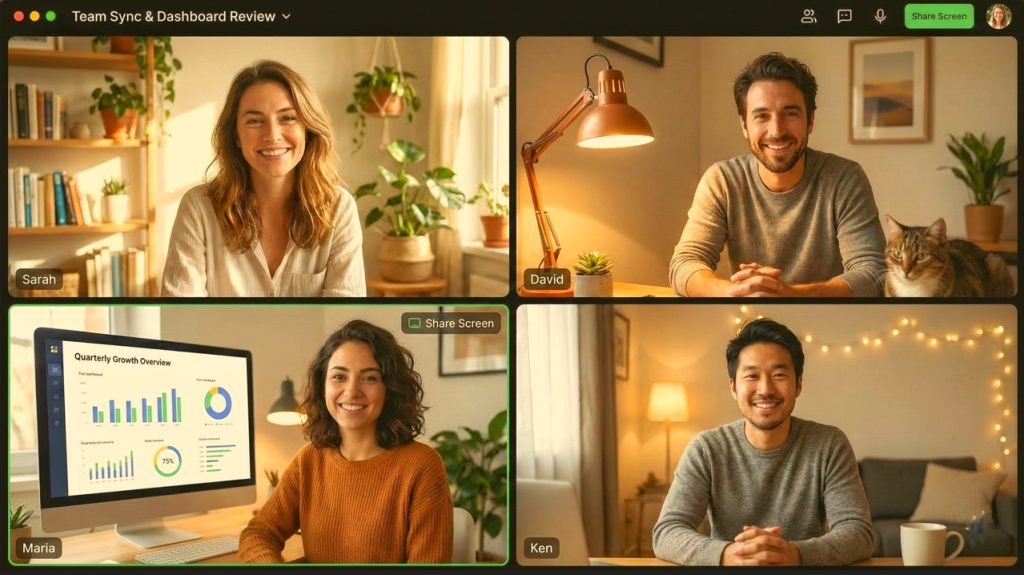
Remote team collaborating happily on a video call
Key Takeaways
- AI isn’t replacing people—it’s removing the junk so people can do their best work
- Faster, data-backed decisions beat gut feelings every time
- Customers stick around when experiences feel personal, not robotic
- Security isn’t optional, and AI is now the best defense we’ve got
- Companies that move fast and adapt win—AI is the accelerator pedal
Wrapping It Up
Digital transformation isn’t really about technology. It’s about working smarter and delivering more value. Right now, AI is the single most powerful way to make that happen. Companies that figure out how to use it well aren’t just keeping up—they’re pulling ahead and staying there.
The gap between leaders and laggards is growing every month. If you haven’t started weaving AI into your digital strategy yet, now’s the time. Your competitors definitely aren’t waiting.
Frequently Asked Questions
Q: Do we need to be a tech company to use AI?
A: Nope. Plenty of “regular” businesses—retail shops, law firms, manufacturers—are using AI today and seeing huge gains. You just need a clear problem and the right tool.
Q: Will AI take everyone’s jobs?
A: It changes jobs, for sure. Repetitive ones shrink. Creative, strategic, and human-touch roles grow. Most companies I’ve seen end up hiring more people after smart automation because they’re growing faster.
Q: Is it expensive to get started?
A: It can be, but it doesn’t have to be. Tons of cloud tools have pay-as-you-go pricing now. Many businesses start with one small project—chatbot, predictive analytics, whatever—and expand from there.
Q: What if our data is messy?
A: Welcome to the club—most companies start there. The good news: a lot of AI platforms clean and organize data as part of the process. Messy data is a feature, not a bug, for many modern tools.
Q: How long until we see results?
A: Depends on the project. Simple automation can pay off in weeks. Bigger predictive stuff might take a few months. But almost everyone sees at least small wins in the first 90 days.
Q: Is AI safe to use with customer data?
A: When you pick reputable vendors and follow basic privacy rules, yes. Most big platforms are built with security and compliance baked in (GDPR, CCPA, etc.).
Q: Where should we start?
A: Look for the most painful, repetitive process in your company right now. That’s usually the perfect first AI project. Quick win, happy team, budget for the next one.
Q: Can small businesses really compete using AI?
A: Absolutely. The tools are cheaper and easier to use than ever. A smart 10-person company can often outmaneuver a slow corporate giant these days.