
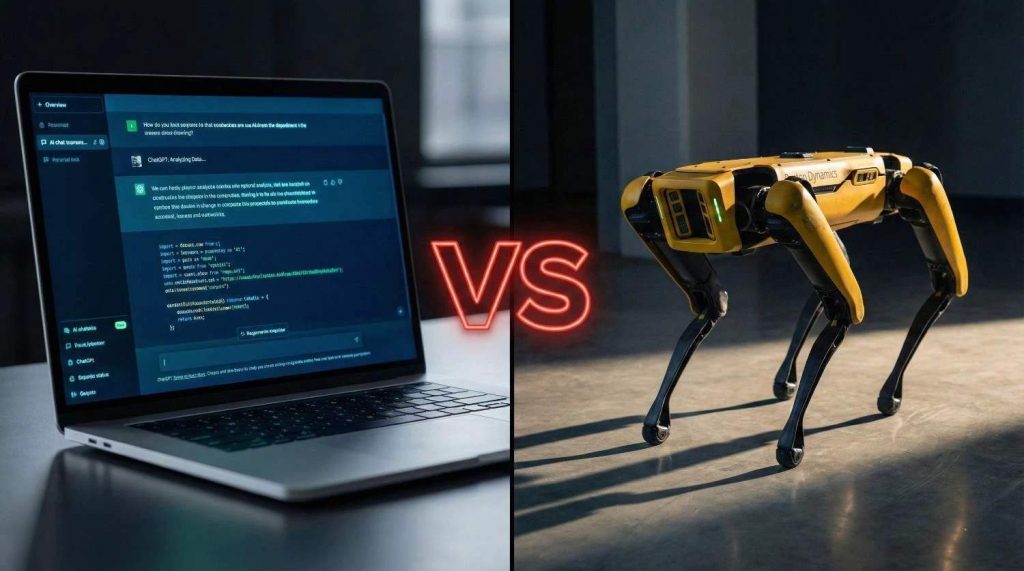
People throw around “AI” and “robotics” like they’re the same thing half the time. You’ll hear someone on the news say “AI robots are taking over factories” and you nod along, but technically that’s sloppy. They’re related, sure, but they’re not twins. Think of it like brains vs bodies. One can exist without the other, and when they team up, that’s when the magic (and sometimes the scary stuff) happens.
What AI Actually Is (And Isn’t)
At its core, artificial intelligence is software that learns patterns, makes predictions, or solves problems better than old-school programming. It doesn’t need arms, legs, or even a screen. ChatGPT? That’s pure AI. The recommendation engine on Netflix? AI. The fraud detection that flags your credit card when you suddenly buy a $3,000 TV in Romania? Also AI.
Most of today’s impressive AI runs on giant language models or neural networks trained on insane amounts of data. It lives in the cloud or on your phone. It has zero physical presence unless you give it one.
I still remember the first time I saw GPT-3 write a decent cover letter for a buddy of mine in 2021. No robot arms, no blinking lights—just text popping out that sounded eerily human. That’s AI doing its thing.
Robotics: The Physical Side of the Equation
Robotics, on the other hand, is all about hardware that moves in the real world. Sensors, actuators, motors, grippers, wheels—the stuff you can drop on your foot and curse about.
A robotic arm welding car frames at a Tesla plant? That’s robotics. A Roomba bumping into your couch at 2 a.m.? Classic robotics. Those creepy-smooth humanoid robots from Figure or Agility Robotics? Still mostly robotics with just a sprinkle of AI for balance and navigation.
Funny story—back when Amazon bought Kiva Systems in 2012, those little orange robots zipping around warehouses were 99% old-school robotics. They followed taped lines on the floor like obedient ants. Only in the last few years did they start slapping real AI on them so they don’t need the tape anymore.
The Big Differences Side-by-Side
Here’s a quick table because, honestly, this stuff is easier when it’s laid out plain:
| Aspect | AI | Robotics |
|---|---|---|
| Physical body? | Usually none | Always has one |
| Needs the real world? | Can train on pure data | Has to deal with gravity, friction, broken parts |
| Failure mode | Might give you a wrong answer | Might drop a $60,000 engine block on someone |
| Energy source | Server farms (tons of electricity) | Batteries or plugged in |
| Cost to get started | You can run Llama 3 on a laptop | Good luck building a decent arm for under $20k |
| Scary to the public | “It’s gonna take my job” | “It’s gonna take my life” (Terminator vibes) |
Where They Overlap (And Why It Matters Now)
This is the fun part. When you marry cutting-edge AI with serious robotics, you get autonomous robots that actually think on their feet.
Real-World Examples That Blew My Mind
- Tesla’s Optimus: Still early, but the newest demos (late 2025) show it folding shirts and walking on uneven ground using end-to-end neural networks—no hand-coded rules. That’s AI fully driving the robot body.
- Boston Dynamics’ Atlas doing parkour: Older versions used tons of pre-programmed moves. The new electric Atlas? Trained in simulation with reinforcement learning, basically the same tricks we use for AI game bots.
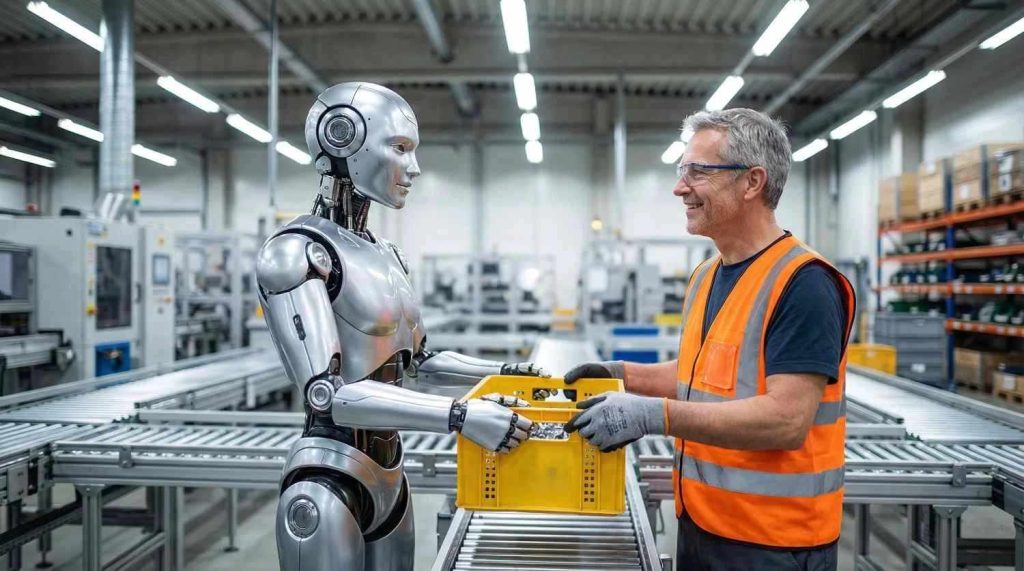
- Figure 02 chatting with a human while making coffee: The language model (probably something like GPT-4o or Claude) decides what to say, then the robot’s brain translates that into actual arm movements. Mind-bending when you watch it live.
Check this clip from Figure’s latest factory pilot—it’s only two minutes and still gives me chills every time:
Why the Combo Is Exploding in 2025–2026
Data got cheap, compute got cheap, and simulation got ridiculously good. Companies can train a robot in a virtual world for pennies, then drop the learned model onto real hardware with only minor tweaks. That’s why we went from “robots can barely walk” in 2019 to “robots casually bringing me a beer” demos in 2025.
How Businesses Are Using Both Right Now
Warehouses: AI predicts what you’re gonna order tomorrow, robotics grabs it off the shelf tonight.
Manufacturing: AI spots defects on a production line faster than any human, robotic arms yank the bad parts before they reach packaging.
Healthcare: Surgical robots like the da Vinci system have been around forever, but now the AI layer suggests the next cut or warns about bleeding risk in real time.
Even farming—John Deere tractors drive themselves (robotics) while AI decides exactly how much fertilizer each square foot of corn needs.
The Stuff People Get Wrong All the Time
- “AI is just robotics with better marketing.” Nope. Plenty of AI has zero physical output.
- “All robots are going to have human-level AI soon.” Hard no. Most factory robots today run on code written in the early 2000s.
- “Robots need AI to be useful.” Tell that to the millions of dumb robotic arms that built your car perfectly fine for decades
Conclusion
AI and robotics are like peanut butter and jelly—great on their own, life-changing together. Right now we’re in that awkward teenage phase where the combo is getting scary-good, scary-fast. In five years your warehouse job, elder-care assistant, or even barista might literally be a robot with a brain the size of a data center.
But here’s the thing: every single leap forward came from humans deciding where to point these tools. The tech isn’t good or evil—it’s a hammer. We still get to choose what we build with it.
Key Takeaways
- AI = smart software, nobody required
- Robotics = physical machines that move and sense
- Together, they create truly autonomous systems
- The real revolution isn’t “robots” or “AI”—it’s the marriage of both
- Most jobs aren’t disappearing tomorrow, but a lot are about to change faster than people think
FAQ
Q: Are you able to have robotics without AI?
A: Absolutely. It has a microwave timer, a small motor–zero AI. Like the vast majority of industrial arms in the 90s and the first half of the 2000s.
Q: Is Siri considered a robot?
A: Nope, just AI. No physical body, no robotics.
Q: Which one is more profitable to study now AI or robotics engineering?
A: AI software positions continue to be slightly higher in terms of base pay (and particularly at FAANG-style organizations), yet hardware-experienced robotics engineers are even more rare and firms are bidding against each other over them.
Q: Do we have any intelligent robots similar to human beings?
A: Language? Getting weirdly close. The common sense of physical knowledge (such as the knowledge of a glass breaking when you drop it)? Even years away to anything dependable beyond the laboratory.
Q: How is the cheapest method of playing both currently?
A: Take a Raspberry Pi, a cheap robot package off Amazon, and toss a load such as ROS 2 + a small image vision model on it. One day you will be banging your head on the wall, and the following day you will be smiling all the time- welcome to the club.
Q: Am I concerned about the AI robots stealing my job?
A: Depends on the job. When it involves a structured job that is repetitive in nature, then it is time to learn the technical side. When it is very creative or very human (therapy, art, leading people), then you have a bit of breathing space. Anyhow, not paying attention to it is no strategy.