

Look, nobody wants to hear that AI job loss in 2026 could hit their paycheck hard, but the reality is, it’s happening faster than most folks realize. In fact, back in my days chatting with buddies in tech hubs like Silicon Valley, we’d joke about robots stealing jobs, yet surprisingly, it’s not so funny anymore. Because now, reports are piling up showing millions of American positions getting automated away, and more importantly, it’s not just blue-collar stuff—white-collar gigs are feeling the squeeze too.
For example, AI is already handling tasks that once required a human touch, from crunching numbers to chatting with customers. As a result, many roles are becoming vulnerable quickly than expected. So, with predictions pointing to a rough ride ahead, it’s worth checking if your role’s on the list.
The big question hanging over everyone’s head is whether AI will wipe out more jobs than it creates by 2026. On one hand, some experts say we’ll see a net loss, while on the other hand, others argue it’ll simply shift things around. However, real data from places like MIT and the World Economic Forum paints a picture that’s hard to ignore. So, let’s break it down without the hype.
How AI is Changing the Job Landscape Right Now
AI isn’t waiting around—it’s already reshaping how we work across the U.S. For instance, you see it in everyday stuff, like chatbots answering your bank questions or algorithms sorting warehouse shelves. But the real question is, what’s the actual impact? According to a recent MIT study, AI could already handle tasks equal to about 12% of the U.S. workforce. In other words, that’s no small number when you consider we’re talking about over 18 million jobs potentially affected.
What the Data Says
Diving deeper, the World Economic Forum’s report estimates a global net loss of 14 million jobs by 2027, and more importantly, the U.S. is expected to take a major hit in repetitive roles. Here in America, SHRM’s research shows 23.2 million jobs already feeling AI’s effects, from automation in factories to smarter software in offices. Even so, it’s not all doom. For example, new roles like AI trainers and data ethicists are popping up. Still, for many workers, it’s now a race to adapt quickly.
Take manufacturing, for example. According to a report from MIT and Boston University, up to two million U.S. manufacturing workers could be replaced by 2026 as robots get cheaper and smarter. In fact, I’ve seen this firsthand in places like Detroit, where assembly lines that once buzzed with people now hum with machines.
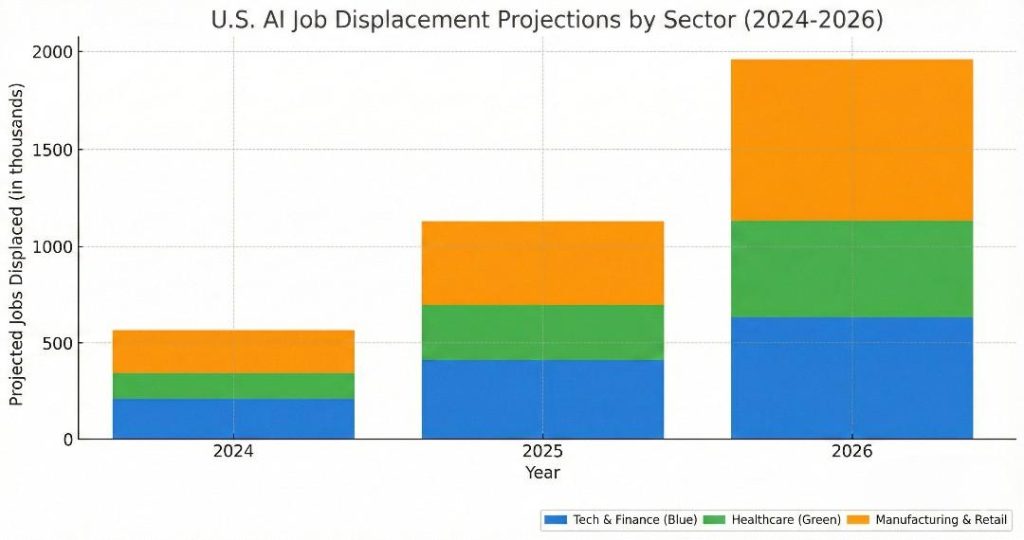
And it’s not stopping there. Furthermore, a Microsoft study highlights jobs heavy on writing or data as prime targets, with interpreters and journalists scoring high on AI vulnerability. In addition, even creative fields aren’t safe when too many routine tasks creep in.
The 7 Jobs on the Chopping Block
Based on all this, I’ve pulled together seven U.S. jobs that data suggests are fading fast due to AI by 2026. These aren’t random predictions—they’re backed by reports from Goldman Sachs, McKinsey, and more. So, I’ll lay out the reasons, with real numbers where they exist, so that you can clearly see the writing on the wall.
1. Data Entry Clerks
Remember typing info into spreadsheets all day? Well, AI is gobbling that up fast. With tools like optical character recognition and automated data processors, this role is becoming increasingly obsolete. According to Goldman Sachs, clerical jobs like these could face massive displacement, with up to 300 million global jobs at risk overall—including a significant chunk in the U.S. In fact, within America specifically, demand is expected to drop by 20–30% by 2026, based on McKinsey’s latest trends.
2. Customer Service Representatives
Chatbots are everywhere now, handling complaints and queries 24/7 without breaks. In fact, Gartner predicts AI will manage 80% of routine customer interactions by 2025, and this trend will continue into 2026, leading to even more layoffs. For example, U.S. call centers have already cut 24% of agents in some cases, according to industry studies. Therefore, if you’re in this field, it’s wise to consider shifting toward oversight roles.
3. Truck Drivers
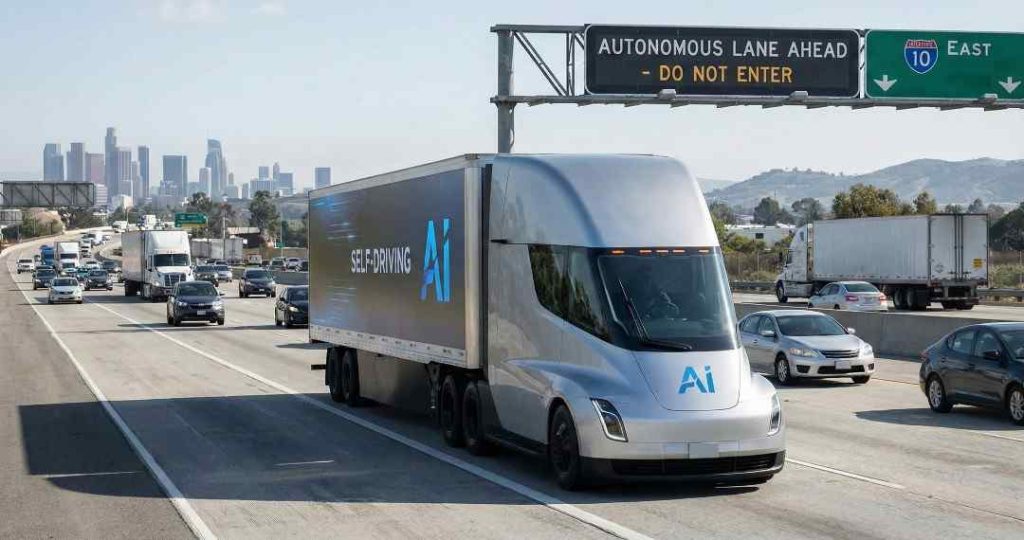
Autonomous trucks are already testing on highways, which is alarming for the 3.5 million U.S. drivers out there. According to the International Transport Forum, 50–70% of driving jobs could vanish by 2030, with significant portions disappearing as early as 2026, especially as companies like Waymo scale up. For instance, UPS already uses AI for route optimization, thereby trimming hours and reducing the need for human drivers.
4. Bank Tellers
With mobile apps and AI advisors, who really needs a teller anymore? While U.S. projections show a 15% decline by 2032, AI is accelerating the trend—in fact, expect half of routine tasks to be automated by 2026. For example, banks like Chase are rolling out virtual assistants, and as a result, small-town branches are feeling the impact hard.
5. Assembly Line Workers
Factories are going robotic. For instance, Foxconn’s replacement of 60,000 workers with bots serves as a clear warning sign. Moreover, in the U.S., over 500,000 industrial robots were installed just last year. According to the World Economic Forum, factory workers are the fastest-declining group, with up to 77% at risk in some studies.
6. Cashiers
Self-checkout kiosks powered by AI are now in nearly every Walmart and Target. As a result, retail giants report needing 40% fewer cashier hours. Furthermore, with AI improving theft detection, this job is shrinking fast—in fact, it’s estimated that up to 20% of these positions could disappear by 2026 in the U.S.
7. Telemarketers
Voice AI is dialing and pitching better than humans, with fewer hang-ups. In fact, studies show that up to 90% of telemarketing tasks can be automated, which is leading to sharp workforce reductions—for example, a potential 30% drop by mid-2026. Although it’s tough on employees, companies are embracing the cost savings.
Preparing for What’s Next
So, if AI job loss in 2026 has you worried, what’s the best move? First of all, upskilling is key—for instance, learning AI basics or pivoting to human-centric fields like healthcare or creative strategy. Moreover, community colleges are offering affordable courses, and according to friends who’ve made the switch, it’s definitely doable with some grit.
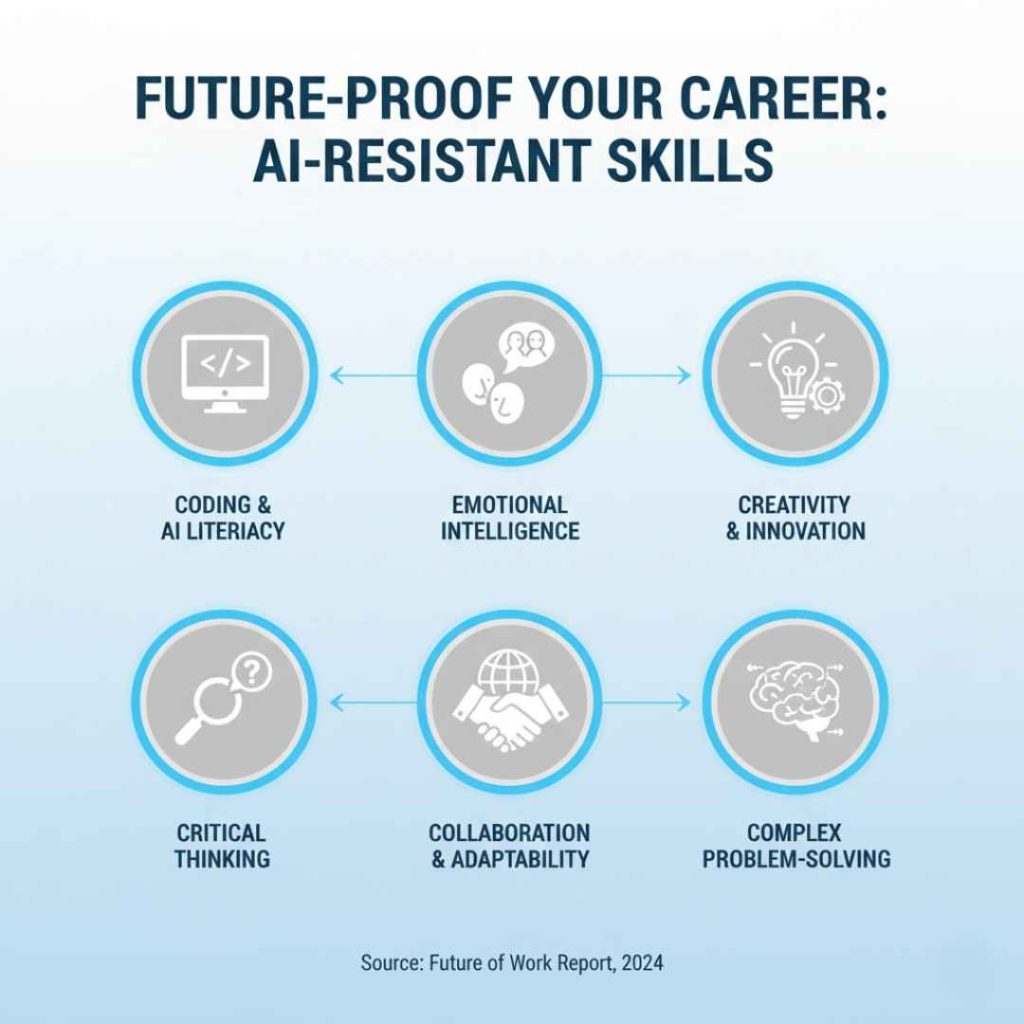
Don’t forget, however, that not every job is doomed. In fact, roles that require empathy or complex decision-making—like nurses or managers—appear to be safer. For more guidance, check out our internal guide on future-proof careers in the AI era.
Wrapping this up, AI’s push means change is coming, but fortunately, it’s not the end of work—it’s more like a remix. Therefore, stay informed, adapt, and you might come out ahead. After all, we’ve seen shifts like this before with the internet, and historically, those who rolled with it did quite well.
Key Takeaways
- AI could impact up to 23 million U.S. jobs already, and this number is expected to grow with more changes by 2026.
- In particular, repetitive tasks in data, customer service, and manufacturing are being hit hardest.
- According to the World Economic Forum, net global job loss might reach 14 million by 2027.
- However, upskilling in AI-related skills could help many workers offset potential losses.
- That said, not all predictions agree—some experts believe job creation could balance things out.
FAQ
Q: How bad will AI job loss get in 2026 for the average American?
A: It depends on your field, but data suggests millions could be affected, especially in routine jobs. According to MIT, 12% of the workforce could see tasks automated, and overall, it’s more about shifting roles than total wipeouts.
Q: Is my job safe if it’s creative, like writing?
A: Not entirely—AI is getting good at drafting, but human flair still wins when it comes to nuanced work. As a result, journalists might need to focus more on investigative tasks.
Q: What industries are seeing the most AI displacement right now?
A: Finance, manufacturing, and retail top the list, with transportation not far behind. Moreover, reports show IT and HR are also trimming roles thanks to automation.
Q: Can I really upskill to beat AI?
A: Yes, many have. For example, start with free online tools or community programs—and it’s worked for people I know in similar situations.
Q: Are these predictions overhyped?
A: Some say yes, while others say no. For instance, experts at Goldman Sachs warn of 300 million global job shifts, but these changes are gradual, not happening overnight.
Q: What’s one thing I can do today to prepare?
A: First, brush up on AI basics—for example, take a short course. This way, you can learn to work with the technology instead of against it.
Key Citations:
- How will Artificial Intelligence Affect Jobs 2026-2030
- AI’s Wake-Up Call: New SHRM Research Reveals 23.2 Million American Jobs Already Impacted
- Top 20 Predictions from Experts on AI Job Loss
- MIT report: AI can already replace nearly 12% of the U.S. workforce
- CEO Today Magazine – Top jobs disappearing due to AI
- Microsoft Study Reveals Which Jobs Are Most Vulnerable to AI
- 48 Jobs AI Will Replace by 2026: Check If Yours is at Risk