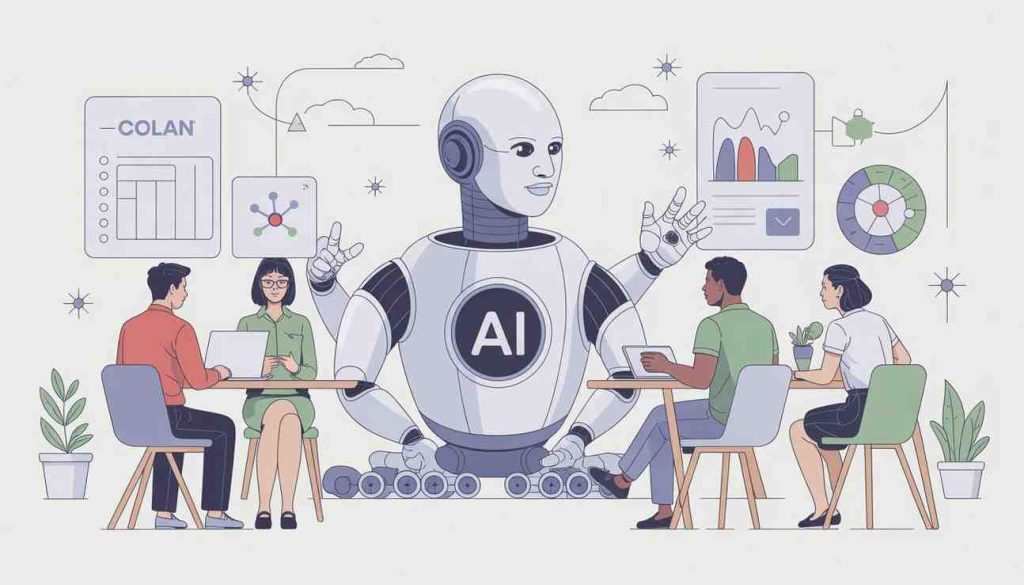
Hey, let’s face it—AI is everywhere these days, popping up in everything from chatbots handling customer queries to algorithms optimizing supply chains. But here’s the thing: while companies are jumping on the AI bandwagon faster than ever, a lot of workers are left scratching their heads, wondering how to actually make it work for them. That’s where the AI adoption skills gap comes in. It’s basically the mismatch between all this shiny new tech rolling out and the real-world know-how people need to use it effectively. And trust me, it’s not just a buzzword; it’s costing businesses big time, with projections showing potential losses up to $5.5 trillion globally by 2026 if we don’t get a handle on it. In this piece, I’ll break down what this gap really means, why it’s such a pain, and—most importantly—some down-to-earth ways to shrink it. We’ll look at strategies that aren’t pie-in-the-sky ideas but stuff that’s already working for companies out there. Because, honestly, minimizing this divide isn’t about overhauling everything overnight; it’s about smart, steady steps that get your team from confused to confident.
Table of Contents
5 Powerful Ways to Close the AI Adoption Skills Gap
The AI adoption skills gap is a real hurdle for many businesses, but research suggests it can be narrowed through targeted training and cultural shifts. It seems likely that upskilling programs and partnerships will play key roles, though challenges like rapid tech changes add complexity. Evidence leans toward a mix of hands-on learning and incentives to empower workers, highlighting the need for balanced approaches that consider both tech-savvy pros and everyday users.
Why the Gap Exists
Companies are rushing to adopt AI, but workers often lack the skills to keep up, leading to frustration and lost productivity. Stats show over 90% of firms could face shortages by 2026, risking trillions in economic hits. Causes include outdated training and misaligned incentives, but the good news is, strategies like personalized learning can help bridge it.
Top Strategies at a Glance
Focus on upskilling existing teams rather than just hiring—it’s more cost-effective and builds loyalty. Encourage collaborations with schools and tech firms for fresh insights. Use no-code tools to make AI accessible without deep coding knowledge. Prioritize continuous learning to adapt to AI’s fast pace.
For more on effective training, check out resources like IBM’s upskilling initiatives.
Understanding the AI Adoption Skills Gap
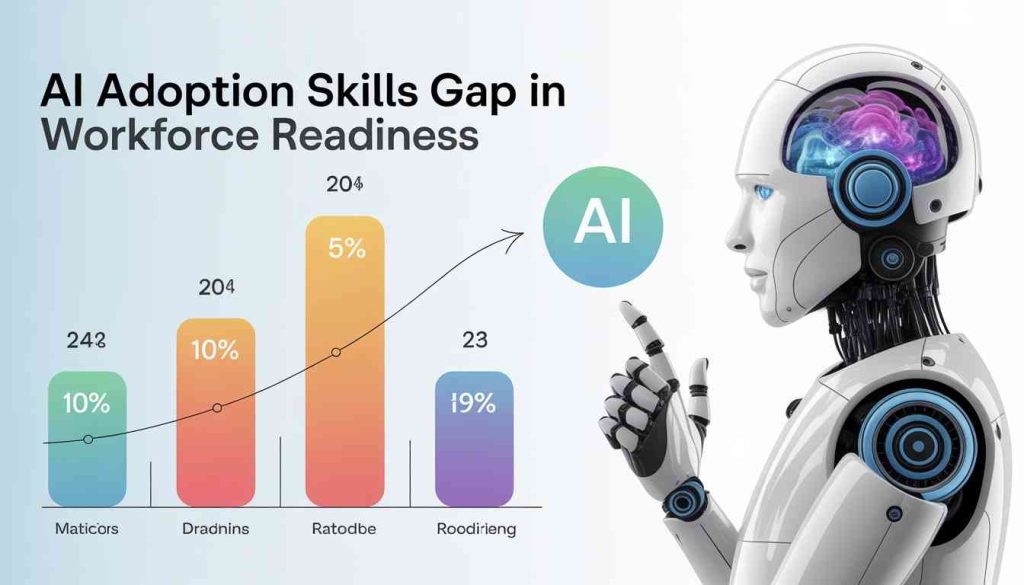
You’ve probably heard the stats: AI spending is set to hit over $550 billion in 2024, but there’s a whopping 50% talent gap staring us in the face. It’s wild how fast things are moving, yet so many folks feel left behind. I remember chatting with a buddy in marketing who said his team got these fancy AI tools, but without proper training, they just sat there gathering digital dust. That’s the gap in action—adoption outpacing mastery.
What Exactly Is This Gap?
At its core, the AI adoption skills gap is the difference between how quickly organizations are implementing AI and how prepared their workers are to leverage it. It’s not just about hardcore coders or data scientists; it’s everyday employees who need basic literacy to interact with AI ethically and productively. Think of it like this: 75% of companies are weaving AI into their operations, but only about 35% are bothering with training their staff. That leaves a huge chunk of the workforce anxious about job changes or straight-up distrusting the tech because they don’t get it. And get this—roles exposed to AI are evolving 66% faster than others, with AI-savvy jobs paying up to 56% more. No wonder there’s such a scramble.
Why It’s Hurting Businesses Right Now
Beyond the numbers, this gap is messing with real outcomes. Companies pour money into AI but see zilch in returns because employees aren’t using it right—or at all. Trust in AI drops the more people use it without support; one report found worker confidence collapsing even as adoption ramps up. Then there’s the broader hit: delayed products, shaky quality, and missed chances that could add up to trillions lost. On a human level, it’s causing “job hugging”—folks clinging to old roles out of fear. I’ve seen it firsthand in small teams where lack of skills leads to burnout or turnover. Plus, it’s uneven; industries like tech lead the way, while others like hospitality lag big time.
Top Strategies to Minimize the AI Adoption Skills Gap
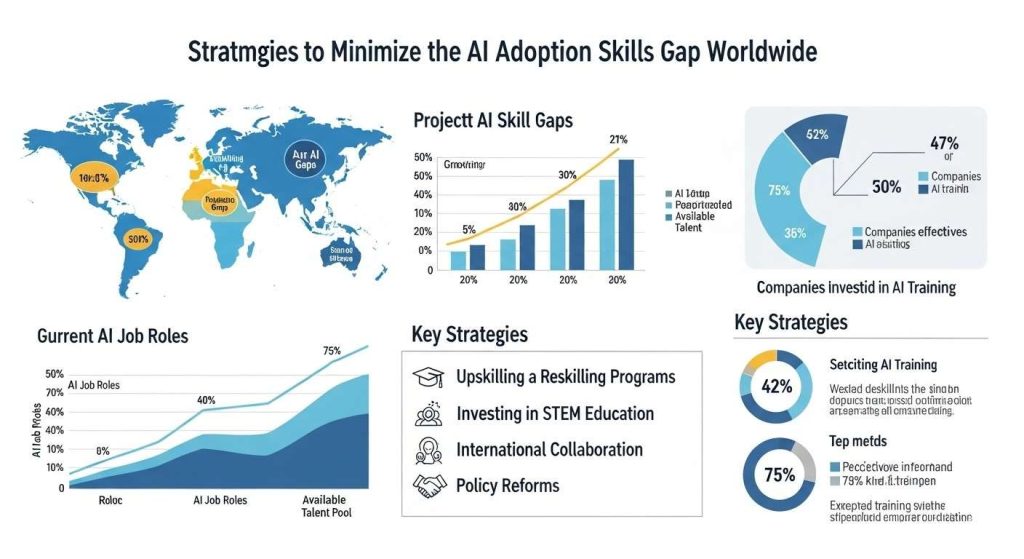
Okay, enough doom and gloom—let’s talk fixes. The key is focusing on people as much as the tech. Research from places like BCG shows that 70% of AI’s value comes from nailing the human side, like processes and change management. Here are five solid ways to chip away at that gap, drawn from what successful outfits are doing.
Ramp Up Upskilling and Reskilling Programs
First off, don’t just hire your way out—train who you’ve got. Structured programs can close gaps in as little as 10 days for priority skills. Start with audits to spot what’s missing, then roll out workshops, certifications, or online courses. Make it personalized; AI-powered platforms can tailor content to individual needs, boosting retention. For example, mix foundational literacy for everyone with deep dives for tech roles. And hey, hands-on labs beat lectures every time—over half of pros say they’re the best for real-world application.
Build Strong Partnerships with Academia and Industry
No one does this alone. Team up with universities or tech giants for co-designed curricula that match real jobs. The OECD highlights how countries like Poland are funding master’s programs in AI through public-private deals. In the US, think bootcamps like the UK’s 16-week ones that guarantee job interviews. These bridges bring fresh talent and keep your team current. Plus, it’s a win for inclusivity—lower entry barriers to pull in diverse groups.
Leverage User-Friendly AI Tools and Platforms
Not everyone needs to be a coder. No-code/low-code platforms lower the bar, letting folks build AI solutions without heavy expertise. Tools like chatbots or copilots integrated into workflows make adoption easier. It’s about democratizing AI—start small with pilots in core processes, not fringes. This way, you sidestep some gaps while building confidence.
Foster a Culture of Continuous Learning
Make learning a habit, not a chore. Micro-learning—short videos or tips—fits busy schedules. Encourage peer sharing, like lunch-and-learns, and use AI tutors for feedback. Leadership buy-in is huge; when execs share their AI journeys, it creates safety for experimentation. Tie it to reviews or bonuses to motivate.
Provide Incentives and Protected Time for Growth
Time is the big barrier—give folks dedicated hours for learning without guilt. Incentives like promotions linked to skills completion work wonders. Subsidies or credits, like Singapore’s SkillsFuture, make it accessible. It’s about aligning rewards with AI use.
To see this in action, check out this helpful YouTube video on how organizations can close the AI skills gap: VIDEO. It’s got great insights from experts.
Real-World Examples of Closing the Gap
Take IBM—they’ve committed to training two million in AI by 2026 through internal academies. Accenture’s doing similar with upskilling pushes. Or look at Johnson & Johnson using “skills inference” to map future needs. In Europe, Germany’s AI Studios offer workshops for SMEs. These aren’t one-offs; they’re scalable models showing real ROI.
| Company/Country | Strategy Used | Outcome |
|---|---|---|
| IBM | Internal AI academies and upskilling | Aiming for 2M trained by 2026, reduced anxiety |
| Singapore | SkillsFuture subsidies for AI literacy | Targeted at-risk workers, flexible courses |
| UK | Skills Bootcamps | 16-week programs with job guarantees |
| Johnson & Johnson | Skills audits and taxonomy | Aligned roles to future AI needs |
Overcoming Common Challenges in Bridging the Gap
Sure, it’s not all smooth. Barriers like data privacy (43% of leaders worry) or costs (40%) pop up. Tackle them with transparent governance and starting small. Resistance? Involve teams early for buy-in. And for inclusivity, focus on vulnerable groups—OECD says flexible options like online courses help. Remember, it’s ongoing; reassess gaps regularly.
Wrapping this up, closing the AI adoption skills gap isn’t some distant goal—it’s doable with the right mix of training, tools, and teamwork. By investing in your people now, you’re not just keeping up; you’re setting up for wins in a world where AI’s only getting bigger. It takes effort, yeah, but the payoff in productivity and innovation? Totally worth it.
Key Takeaways
- Audit First: Always start by identifying specific AI adoption skills gaps in your team to target efforts effectively.
- Train Smart: Use personalized, hands-on upskilling to build both literacy and advanced skills without overwhelming folks.
- Collaborate Widely: Partnerships with schools and industry can bring fresh, relevant training—don’t go solo.
- Make It Accessible: No-code tools and incentives lower barriers, making AI mastery feasible for all.
- Keep Evolving: Foster continuous learning to stay ahead of AI’s rapid changes.
FAQ
What’s the biggest cause of the AI adoption skills gap? Oh man, it’s mostly the lightning-fast pace of AI tech outrunning traditional training. Companies adopt tools quick, but without upskilling, workers get left in the dust—think 56% reporting no recent development despite widespread AI use.
How can small businesses tackle the AI adoption skills gap without big budgets? Start simple: Use free or low-cost online bootcamps and no-code platforms. Partner with local colleges for workshops—it’s cheaper than hiring experts and builds skills organically.
Are there government programs to help close the AI adoption skills gap? Yeah, definitely. Places like Singapore offer subsidies through SkillsFuture for AI courses, and the UK has bootcamps with job links. Check your local workforce initiatives—they often target this exact issue.
How long does it take to minimize the AI adoption skills gap in a team? It varies, but priority gaps can close in under 10 days with focused sprints. For broader mastery, aim for ongoing programs over months to really embed the skills.
What’s a quick win for addressing the AI adoption skills gap? Micro-learning! Short, bite-sized sessions on AI basics fit into busy days and build confidence fast—better than long, forgotten workshops.
Does the AI adoption skills gap affect all industries the same? Nah, it’s uneven—tech and media adopt fast, while food services lag. But every sector feels it, with knowledge work hit hardest.
Key Citations
- AI adoption is accelerating, but confidence is collapsing
- The $5.5 Trillion Skills Gap: What IDC’s New Report Reveals About AI Workforce Readiness
- AI Skills Gap – IBM
- How organizations use AI to eliminate skills gaps
- Bridging the AI skills gap
- Strategies to Tackle the AI Skills Gap | BCG
- Reducing the AI Skills Gap
- AI Now: Skills Gap, Uneven Adoption, and AI Job Cuts
- Effective Strategies to Bridge the AI Skills Gap
- Overcome Barriers to AI Adoption with the Right Strategy
- Accelerating workforce AI skills: 5 practices to quickly close skills gaps