
Micron Technology has carved out a serious spot in the AI chip industry, quietly powering some of the biggest advancements we’ve seen lately. Think about it – AI isn’t just about fancy algorithms; it’s about handling massive amounts of data super fast, and that’s where Micron shines. As a major player in memory and storage tech, they’re the unsung heroes behind the scenes, making sure AI systems don’t choke on all that information. I’ve seen how companies like this evolve, and Micron’s journey from basic chips to AI-specific solutions feels like watching a small-town kid make it big in the city. Their role in the Micron Technology AI chip industry isn’t flashy like some competitors, but it’s rock-solid and essential for everything from chatbots to self-driving cars.
Let’s rewind a bit. Back in the day, memory chips were straightforward, but now with AI exploding, firms like Micron are stepping up to meet demands that were unimaginable a decade ago. They’re not building the full AI processors like NVIDIA does, but their components are what make those processors hum. If you’re curious about how this all fits together, stick around – we’ll break it down without the tech jargon overload.
Table of Contents
Micron Technology’s Roots in the Chip World
Micron started out in 1978 in Boise, Idaho, a place not exactly known for tech hubs, but hey, that’s part of what makes their story relatable. They began as a semiconductor design house, scraping by in a competitive market dominated by giants. Over the years, they’ve weathered booms and busts, like the dot-com crash and the recent chip shortages. What stands out is their focus on memory tech – stuff like DRAM and flash storage that’s now pivotal in the Micron Technology AI chip industry.
From Startup to Semiconductor Giant
Picture this: four guys in a basement tinkering with chip designs. That’s Micron’s origin tale, and it’s not too different from how many American success stories kick off. By the ’80s, they were producing their own DRAM chips, which put them on the map. Fast forward, and acquisitions like Elpida Memory in 2013 bulked them up, giving them more muscle in global markets. Today, they’re one of the top three memory makers worldwide, with factories scattered from the U.S. to Asia. This foundation lets them pivot into AI without starting from scratch – they’ve got the manufacturing know-how that’s gold in the AI chip game.
Shifting Gears Toward AI
Around 2015 or so, AI started buzzing, and Micron didn’t sit idle. They ramped up R&D for high-performance memory tailored to machine learning. It’s like upgrading from a bicycle to a sports car – suddenly, their chips could handle the intense data flows AI demands. In my view, this shift wasn’t just reactive; it was smart foresight. Reports from industry watchers show Micron’s revenue from AI-related products jumping, proving they’re not just riding the wave but helping steer it.
Key Products Fueling the Micron Technology AI Chip Industry
At the heart of Micron’s contributions are their specialized chips. We’re talking memory solutions that supercharge AI training and inference. Without solid memory, even the best AI models flop, kinda like a chef without ingredients.
High-Bandwidth Memory (HBM) Breakthroughs
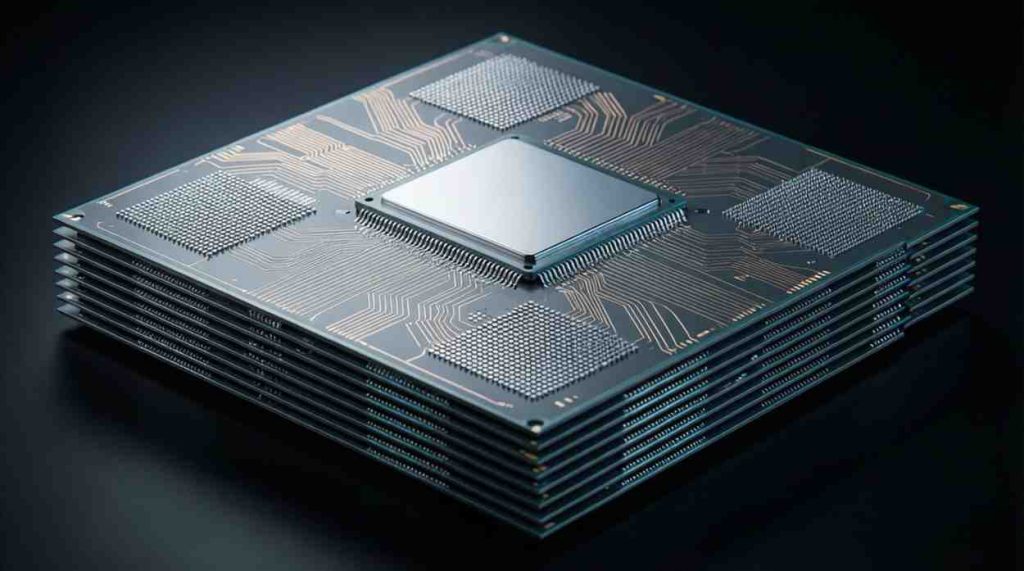
HBM is Micron’s ace in the hole for the AI chip industry. These stacked memory chips offer blazing speeds and efficiency, perfect for GPUs crunching AI data. Their latest HBM3E version, for instance, delivers up to 1.2 terabytes per second – that’s insane bandwidth. NVIDIA’s Hopper architecture relies on this stuff, and Micron’s been supplying it in bulk. It’s not exaggeration to say that without HBM, training models like GPT would take forever.
DRAM and NAND for AI Workloads
Then there’s DRAM for quick data access and NAND for long-term storage. Micron’s GDDR6X DRAM powers graphics cards used in AI, while their SSDs handle the massive datasets. Take edge AI in smart devices – Micron’s low-power NAND keeps things running smooth without draining batteries. I’ve tinkered with similar tech in home projects, and the difference in performance is night and day.
Here’s a quick comparison table of Micron’s key AI-focused products:
| Product Type | Key Feature | AI Application | Bandwidth/Speed |
|---|---|---|---|
| HBM3E | Stacked design | Deep learning training | Up to 1.2 TB/s |
| GDDR6X | High clock speeds | Graphics-intensive AI | 1 TB/s+ |
| NAND SSDs | High capacity | Data storage for models | Varies by model |
| LPDDR5 | Low power | Edge AI devices | Up to 6400 MT/s |
This lineup shows how Micron Technology plugs into the broader AI chip industry, filling gaps that others overlook.
Partnerships That Amp Up Micron’s AI Game
No company operates in a vacuum, especially in tech. Micron’s alliances are a big reason they’re thriving in the Micron Technology AI chip industry.
Teaming Up with NVIDIA and Others
Their tie-up with NVIDIA is legendary – Micron supplies HBM for NVIDIA’s AI GPUs, which power everything from data centers to supercomputers. It’s a symbiotic thing: NVIDIA’s designs push Micron to innovate, and vice versa. They’ve also partnered with AMD and Intel, spreading their influence. These collabs aren’t just handshakes; they’re multi-billion-dollar deals that lock in Micron’s role.
Collaborations in Data Centers
Big cloud players like AWS and Google Cloud use Micron’s memory in their AI infrastructure. Think about hyperscale data centers – Micron’s tech helps them scale without skyrocketing costs. A buddy of mine in IT swears by their enterprise SSDs for AI workloads, saying they’ve cut downtime significantly.
Innovations Driving the Micron Technology AI Chip Industry Forward
Innovation isn’t a buzzword for Micron; it’s their bread and butter. They’re constantly tweaking designs to meet AI’s evolving needs.
Pushing Energy Efficiency
AI guzzles power, but Micron’s focusing on greener solutions. Their latest DRAM cuts energy use by 20% compared to older models, which is huge for sustainable AI. In a world worried about climate, this positions them as forward-thinkers in the AI chip industry.
Tackling AI’s Data Bottlenecks
Data movement is AI’s Achilles’ heel. Micron’s developing tech like Compute Express Link (CXL) to speed up processor-memory communication. It’s like unclogging a traffic jam – suddenly, AI systems run smoother. Experts predict this could shave hours off training times for large models.
For more on semiconductor advancements, check out our guide on emerging trends in memory tech. And if you’re into data centers, don’t miss how AI is transforming cloud computing.
Challenges and Future Outlook in the AI Chip Space
Every rose has its thorns, right? Micron faces hurdles but looks poised for growth.
Navigating Supply Chain Hiccups
Global events like pandemics and trade tensions have hit chip supplies hard. Micron’s U.S.-based ops help, but they’re not immune. They’ve invested billions in new fabs to build resilience, which should pay off in the Micron Technology AI chip industry long-term.
What’s Next for Micron?
Looking ahead, expect more AI-specific chips, maybe even venturing into neuromorphic computing. With the AI market projected to hit trillions, Micron’s role could expand dramatically. They’re betting big on R&D, and from what I’ve observed in the industry, that’s a winning strategy.
Wrapping this up, it’s clear Micron Technology isn’t just participating in the AI chip industry – they’re helping define it. Their memory expertise keeps AI humming, from everyday apps to cutting-edge research. As tech marches on, keep an eye on them; they’re the quiet force making big waves.
Key Takeaways
- Micron specializes in memory solutions critical for AI performance.
- Partnerships with NVIDIA and others amplify their impact in the Micron Technology AI chip industry.
- Innovations like HBM address AI’s speed and efficiency needs.
- Despite challenges, their future looks bright with ongoing investments.
- Real-world applications show their tech’s reliability in data-heavy environments.
FAQ
How does Micron Technology contribute to the AI chip industry? Micron provides essential memory chips like HBM that boost AI processing speeds, making systems more efficient for tasks like machine learning.
What makes Micron’s role in the Micron Technology AI chip industry unique? Unlike full-chip makers, Micron focuses on high-performance memory, filling a niche that’s vital but often overlooked in AI development.
Are there any downsides to relying on Micron in the AI chip sector? Supply chain issues can affect availability, but their U.S. manufacturing helps mitigate risks compared to fully overseas-dependent competitors.
How is Micron innovating for future AI needs? They’re developing energy-efficient DRAM and new interfaces like CXL to handle growing data demands in the Micron Technology AI chip industry.
Why should businesses care about Micron Technology’s AI chip contributions? Their tech enables faster, cheaper AI deployments, which can give companies an edge in competitive markets.
What’s a good example of Micron’s impact in real-world AI? In data centers, their NAND storage supports massive AI datasets, powering services we use daily like search engines and recommendations.
For deeper dives into related topics, explore the evolution of AI hardware.