
You know, I’ve been following tech stocks for years, and it’s wild how things shift so fast. Just think about it—AI isn’t some far-off dream anymore; it’s everywhere, from chatbots to self-driving cars. And right in the middle of this explosion is Micron Technology, a company that’s been quietly powering the memory behind all that smart stuff. The AI-driven demand for Micron has really kicked things into high gear, pushing the company into what feels like a whole new era of growth. We’re talking about memory chips that handle massive data loads for AI training, and Micron’s at the forefront.
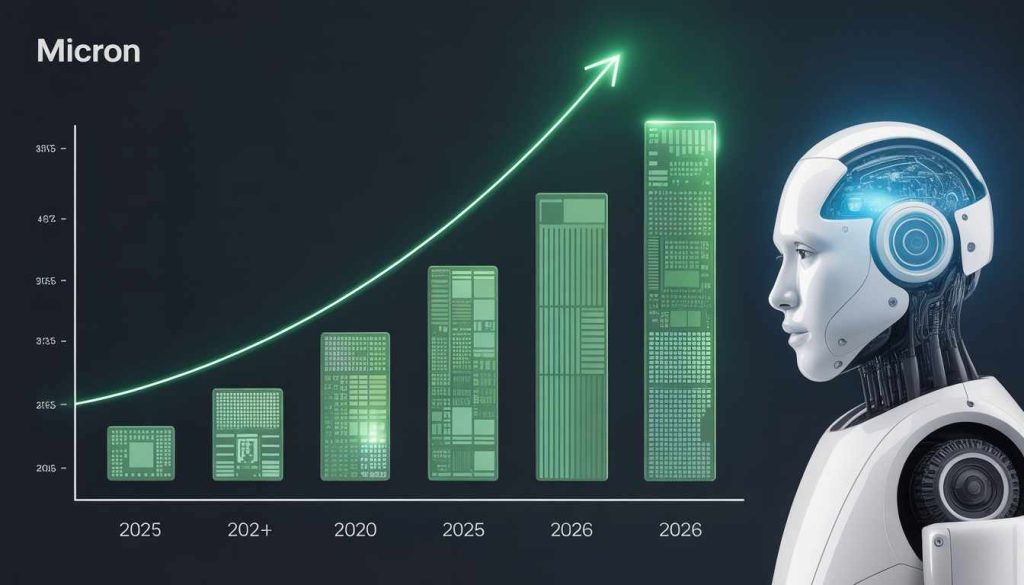
Back when I first invested in tech, memory makers like Micron were seen as cyclical—up one year, down the next. But AI changes that. With data centers ramping up for AI workloads, the need for high-bandwidth memory (HBM) and DRAM has skyrocketed. Analysts are forecasting that this AI-driven demand for Micron could double its revenue by fiscal 2026, hitting around $74 billion. That’s not just numbers on a page; it’s real-world impact from companies like Google and Amazon building out huge AI infrastructures.
Table of Contents
Understanding the AI Boom’s Impact on Memory Chips
AI systems gobble up data like nothing else. Training a single large language model can require terabytes of memory, and that’s where Micron shines. The AI-driven demand for Micron isn’t just hype—it’s backed by a surge in orders for specialized chips that make AI faster and more efficient.
What Makes Micron Stand Out in the AI Landscape?
Micron’s edge comes from its focus on advanced memory tech. They’ve got HBM3E and are gearing up for HBM4, which are basically the gold standard for AI accelerators. Unlike general-purpose chips, these are tailored for the intense computations in data centers. I remember chatting with a buddy in the industry who said, “Without solid memory, your fancy GPU is just sitting there twiddling its thumbs.” That’s spot on.
And get this: Micron’s entire 2026 HBM output is already sold out. Customers are locking in multi-year deals because they know supply won’t keep up. This AI-driven demand for Micron has created a tight market, driving prices up and margins along with them.
Key Drivers Behind the Surge
Several factors are fueling this. First off, the explosion in AI data centers—think hyperscalers like Microsoft pouring billions into infrastructure. Second, the shift to higher-capacity servers means more memory per unit. Here’s a quick breakdown in a table to make it clearer:
| Driver | Impact on Micron | Example Forecast |
|---|---|---|
| AI Data Center Growth | Increases HBM and DRAM demand | HBM market to $100B by 2028 |
| Pricing Power | Higher margins from shortages | DRAM prices up 20% in Q1 2026 |
| Tech Advancements | Leadership in HBM3E/HBM4 | Sold-out supply through 2026 |
| Industry Consolidation | Fewer players, more control | Revenue doubling to $74B in FY2026 |
It’s not all smooth, though. Supply chains can get bumpy, but Micron’s positioning looks strong.
Micron’s Financial Leap: From 2025 Wins to 2026 Projections
Man, 2025 was a banner year for Micron—their stock soared over 200% in some estimates, all thanks to that AI push. Now, eyes are on 2026, where the AI-driven demand for Micron is expected to keep the momentum going strong.
Record-Breaking Q1 Results
In their first quarter of fiscal 2026, Micron hit a whopping $13.64 billion in revenue, up 57% year-over-year. That’s their highest ever, driven by AI-related sales in HBM and NAND. Gross margins? They jumped to around 68%, which is insane for a memory company. “We’re seeing demand exceed supply in ways we haven’t before,” said CEO Sanjay Mehrotra in the earnings call—that’s the kind of confidence that gets investors excited.
Bold Capex Plans and What They Mean
To meet this rush, Micron’s hiking capex to $20 billion for 2026. That’s up $2 billion from earlier plans, aimed at expanding fabs in New York, Japan, and Singapore. Sure, it’s a big spend, but it’s necessary to ramp up production for AI-driven demand for Micron. In my experience watching these cycles, companies that invest smartly during booms come out ahead. This could mean new facilities online by 2030, but the short-term boost is already locked in with committed orders.
For more on Micron’s investment strategy, head over to our detailed Micron stock analysis page—it’s got the latest breakdowns.
Challenges Amid the Hype: Supply Shortages and Risks
Okay, let’s be real—not everything’s roses. The AI-driven demand for Micron has created bottlenecks that could linger.
The Persistent Memory Crunch
Experts predict shortages in DRAM and NAND will stretch beyond 2026. Micron can only meet half to two-thirds of key customer needs right now, even with expansions. Customers are worried about long-term access, leading to those locked-in contracts. It’s a double-edged sword: great for pricing, but if supply lags too much, it might slow AI rollouts elsewhere.
Navigating Market Volatility
Memory’s always been cyclical, and while AI seems to be changing that, risks like potential AI capex pullbacks or economic dips could hit hard. Plus, with peers like Samsung and SK Hynix in the mix, competition’s fierce. But Micron’s U.S. base gives it an edge with domestic incentives. I’ve seen similar setups before, and staying agile is key.
Investor Perspectives: Why Analysts Are Bullish
Wall Street’s loving this story. The AI-driven demand for Micron has led to upgraded targets across the board.
Stock Performance and Targets
Micron’s up big post-earnings, with some analysts eyeing $500 per share. Consensus points to EPS of $35–$40 for FY2026, potentially climbing higher. Compared to 2025’s gains, 2026 could see 30–80% upside, per firms like Baird and Rosenblatt.
Want deeper dives? Our semiconductor market trends article covers how AI’s reshaping the whole sector.
Comparisons to Peers Like Nvidia
Nvidia’s the AI darling, but Micron’s the unsung hero supplying the memory Nvidia’s GPUs need. While Nvidia grabs headlines, Micron’s quieter growth might offer better value—trading at just seven times forward earnings. It’s like the behind-the-scenes player that’s essential to the show.
As we wrap this up, it’s clear the landscape’s evolving fast. Micron’s not just riding the AI wave; it’s helping shape it with innovative memory solutions. With shortages persisting and demand only growing, the company’s set for sustained wins. But hey, markets can surprise you—always do your homework.
Key Takeaways
- AI-Driven Demand for Micron is Transformative: Pushing revenue toward $74 billion in FY2026, with HBM leading the charge.
- Supply Constraints Boost Pricing: Shortages expected beyond 2026, giving Micron strong margins.
- Investment Risks Remain: Cyclical nature and capex needs could pose challenges.
- Bullish Outlook from Analysts: Targets up to $500, highlighting growth potential.
- Tech Leadership Key: Advances in HBM3E and HBM4 position Micron ahead.
FAQ
How is AI-driven demand for Micron affecting its stock price? Well, it’s been a game-changer. With AI needing tons of high-speed memory, Micron’s shares jumped over 200% in 2025 alone, and analysts see more upside into 2026 as shortages keep prices high.
What role does HBM play in the AI-driven demand for Micron? HBM, or high-bandwidth memory, is crucial for AI accelerators. Micron’s sold out its entire 2026 supply, which means this demand is locking in big revenues—think $100 billion market by 2028.
Is the AI-driven demand for Micron sustainable beyond 2026? From what we’re seeing, yeah, it looks that way. Shortages are projected to last, and with AI expanding into more areas like autonomous vehicles, Micron’s growth phase could stretch further. But keep an eye on global economics.
Why are analysts so optimistic about AI-driven demand for Micron? They point to record Q1 revenues and capex plans that ramp up production. Plus, compared to peers, Micron’s valuation seems undervalued given the AI boom—EPS could hit $40 or more in FY2026.
How does AI-driven demand for Micron compare to other chipmakers? It’s similar to Nvidia’s GPU surge, but Micron focuses on memory, which is the backbone. While Nvidia gets the spotlight, Micron’s quieter role means potentially steadier gains without as much hype volatility.
What risks come with investing in Micron amid AI-driven demand? Supply chain hiccups or a slowdown in AI spending could bite. Also, the industry’s history of cycles means nothing’s guaranteed, even with current shortages.
Key Citations:
- Micron Technology: Riding On AI-Driven Growth (NASDAQ:MU)
- Micron Posts Record Revenue on AI-Driven HBM Demand
- Micron Technology: Positioned to Ride the AI Memory Boom in 2026
- Micron says memory shortage will ‘persist’ beyond 2026
- Micron’s Quiet Pricing Power Is Reshaping The AI Boom
- Micron Predicts Memory Shortages Will Continue Past 2026
- The Case for Micron Technology in 2026