
AI tools for students are becoming a common part of modern classrooms. Picture this: a high school junior staring at a blank screen late at night, struggling with a history essay on the Civil War. They type a quick prompt into ChatGPT—one of the most popular AI tools for students—and boom, out comes a structured outline with key facts and even some quotes. Sounds handy, right?
But then the teacher runs it through a plagiarism checker, and questions start flying. This kind of situation is happening more and more in classrooms across the U.S. As AI tools for students like ChatGPT pop up everywhere, schools are scrambling to decide whether to embrace them or ban them outright. It’s a hot topic, especially as kids head back to school and technology keeps evolving.
So, should students get the green light to use these AI helpers for homework and projects? Let’s dig in, weighing the good, the bad, and what might work best.
The Upsides of Letting AI into the Classroom
One big reason folks are buzzing about AI in schools is how it can make learning feel more tailored and less one-size-fits-all. Think about it—traditional classrooms often move at the pace of the average student, leaving some bored and others lost. AI changes that game.
Personalized Help That Fits Each Kid
AI tools can act like a personal tutor who’s always available. For example, if a student is weak in math, ChatGPT or similar programs can break down problems step by step, adjusting explanations based on what the kid needs. A report from the U.S. Department of Education highlights how these intelligent tutoring systems spot patterns in a student’s work and offer instant feedback, which can boost engagement and help kids grasp tough concepts faster. It’s especially helpful for students with disabilities or those learning English as a second language—tools can translate materials on the fly or read text aloud.
In real life, I’ve heard from parents whose kids use AI to clarify confusing topics without waiting for office hours. One mom told me her son, who has dyslexia, uses speech-to-text features to jot down ideas quickly, turning what used to be a frustrating chore into something manageable. Studies back this up too; research shows AI can improve academic outcomes by personalizing lessons, making school feel less overwhelming and more achievable.
Making Learning More Fun and Efficient
Beyond personalization, AI can spark creativity and save time. Teachers are using it to brainstorm lesson ideas, like generating fun project prompts for a sci-fi unit or creating quizzes on historical events. For students, it means getting quick summaries of long readings or help organizing study schedules. Honestly, it’s kind of like having a super-smart study buddy who doesn’t get tired.
A survey of U.S. educators found that 60% have already dipped into AI for classroom stuff, and many say it amps up student involvement. Plus, it preps kids for the real world—jobs today often involve AI, so learning to use it responsibly now could give them an edge later. Check out this YouTube video where a teacher breaks down how ChatGPT can turn boring assignments into interactive adventures: VIDEO. It’s eye-opening and shows the potential without sugarcoating the challenges.

The Potential Pitfalls and Worries
Of course, it’s not all sunshine. Letting AI loose in schools comes with some serious red flags that can’t be ignored. Educators and parents are worried it might do more harm than good if not handled correctly.
Cheating and Losing Out on Real Learning
The biggest headache? Cheating. Students can punch in a prompt and get a full essay spit out in seconds, then pass it off as their own. About one in four teachers have already caught kids doing this. It’s plagiarism, plain and simple, and it shortcuts the whole point of school—building skills like critical thinking and problem-solving.
Over-relying on AI might make kids lazy about digging deep into subjects. If they’re always getting answers handed to them, they miss out on that “aha” moment from figuring things out themselves. One principal with decades in education pointed out that while AI can clarify ideas, using it as a crutch prevents students from developing independent research habits. And let’s be real, it can hurt relationships too—kids might bond less with teachers if they’re turning to bots instead of asking for help in person.
Inaccurate Info and Other Risks
AI isn’t perfect. It pulls from the internet, so it can spit out wrong facts, biased views, or outdated info. Imagine a student citing a made-up quote in a paper because ChatGPT hallucinated it—that’s a quick way to tank a grade. There’s also the mental side; some studies suggest that overusing AI could lead to isolation or stress if it replaces human chats, though it can help with quick support too.
Privacy is another thorny issue. These tools collect data, and schools need to ensure kids’ info stays safe under laws like FERPA. Plus, not every student has equal access to tech, so AI could widen gaps between rich and poor districts.
What Real Teachers and Studies Are Saying
It’s one thing to talk theory, but what do the people in the trenches think? Teachers across the country are split, but many are finding ways to make it work.
Voices from the Front Lines
Take Cherie Shields, a high school English teacher—she uses ChatGPT to translate assignments for non-English speakers and tweak reading levels for struggling kids. But she’s clear: it shouldn’t replace student effort. Another educator, Donnie Piercey, has kids edit AI-generated scripts for plays, turning it into a collaborative tool that builds skills.
On the flip side, districts like New York City banned it initially over cheating fears, though some are easing up with guidelines. A recent EdWeek report notes that while 69% of teachers say AI improves their methods, it’s also straining student-teacher bonds.
Insights from Research
Diving into studies, AI seems to shine in boosting outcomes when used right. One review found it enhances problem-solving and collaboration skills. But the U.S. Department of Ed warns about biases in AI that could unfair disadvantage some groups, stressing the need for “human in the loop” oversight. Another study on higher ed showed mixed effects on mental health—helpful for quick support but risky for over-dependence.
Here’s a quick table summing up key findings from recent research:
| Aspect | Positive Impact | Negative Impact |
|---|---|---|
| Learning Outcomes | Personalized feedback improves engagement and scores | Over-reliance reduces critical thinking |
| Equity | Adapts to diverse needs, like for neurodiverse students | Biases in data can widen achievement gaps |
| Teacher Role | Frees up time for creative teaching | Adds burden of checking for AI misuse |
| Mental Health | Quick support reduces stress | May increase isolation from less human interaction |
Striking a Balance: Guidelines for Smart AI Use
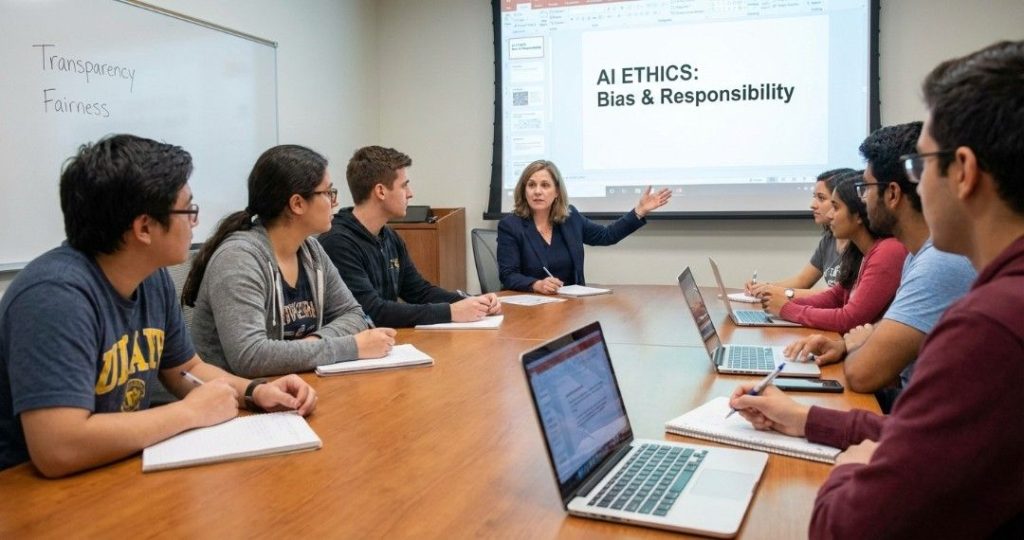
So, ban it or embrace it? Maybe neither—experts suggest a middle ground. Schools could teach AI literacy, like how to fact-check outputs and cite them properly. For more on AI ethics in education, check out our related piece here.
Teachers can design “AI-proof” assignments, like personal reflections or hands-on projects that bots can’t fake well. Policies should include clear rules: use AI for brainstorming, but show your own work. And involve parents—supervision at home can prevent misuse.
In the end, it’s about using AI as a tool, not a replacement. With the right guardrails, it could transform education for the better.
Conclusion
Wrapping this up, allowing AI tools like ChatGPT in school work isn’t a simple yes or no. The evidence leans toward cautious use—it offers real boosts in personalization and efficiency, but risks like cheating and skill loss are too big to ignore. Schools need to adapt, teaching kids to wield these tools wisely. As tech keeps changing, staying flexible and focused on real learning will be key. What do you think—ready to let AI in, or better to keep it at arm’s length?
Key Takeaways
- AI can make learning more personal and engaging, acting like a 24/7 tutor for tough subjects.
- But watch out for cheating; it might shortchange kids on building essential skills.
- Teachers are mixed—some love it for brainstorming, others worry about misinformation.
- Research shows benefits in outcomes but warns of biases and privacy issues.
- Balance is crucial: teach ethical use and design assignments that encourage original thinking.
FAQ
Q: How can AI tools for students help improve homework and study habits?
A: AI tools for students like ChatGPT can provide structured outlines, answer questions instantly, and suggest resources. They help students organize their homework, understand complex topics faster, and improve overall study efficiency.
Q: Are AI tools for students safe and reliable for school projects?
A: Yes, AI tools for students are generally safe when used responsibly. They can assist with research, brainstorming, and writing tips, but students should always double-check facts and avoid plagiarism to ensure their work remains original and credible.
Q: What’s the biggest pro of using ChatGPT for homework?
A: It gives instant, tailored help, like explaining concepts in simple terms or adjusting to a student’s pace, which can really help struggling kids catch up.
Q: Can AI really lead to more cheating in schools?
A: Yeah, unfortunately—it’s easy to generate whole assignments, but teachers are getting better at spotting it with tools and smarter prompts.
Q: How are teachers actually using AI in class right now?
A: Some create quizzes or translate materials, others have students edit AI outputs to build critical skills. It’s all about integration, not replacement.
Q: Is there any research saying AI hurts kids’ mental health?
A: Some studies point to potential isolation if it cuts down on human chats, but it can also reduce stress by offering quick support when needed.
Q: Should schools ban AI tools completely?
A: Probably not—that might leave kids unprepared for the future. Better to set rules and teach responsible use.
Q: What if a student gets wrong info from AI?
A: That’s a risk; always double-check with reliable sources. AI’s great for ideas, but not always for facts.
Key Citations:
- Should Students Use AI for Homework? Pros and Cons
- AI in Schools: Pros and Cons
- Rising Use of AI in Schools Comes With Big Downsides for Students
- The Impact of Artificial Intelligence (AI) on Students’ Academic Performance: A Systematic Review
- Exploring the effects of artificial intelligence on student and academic well-being in higher education: a mini-review
- Artificial Intelligence and the Future of Teaching and Learning
- How artificial intelligence in education is transforming classrooms
- Artificial intelligence in education: A systematic literature review
- Rising Use of AI in Schools Comes With Big Downsides for Students
- As ChatGPT Enters the Classroom, Teachers Weigh Pros and Cons