
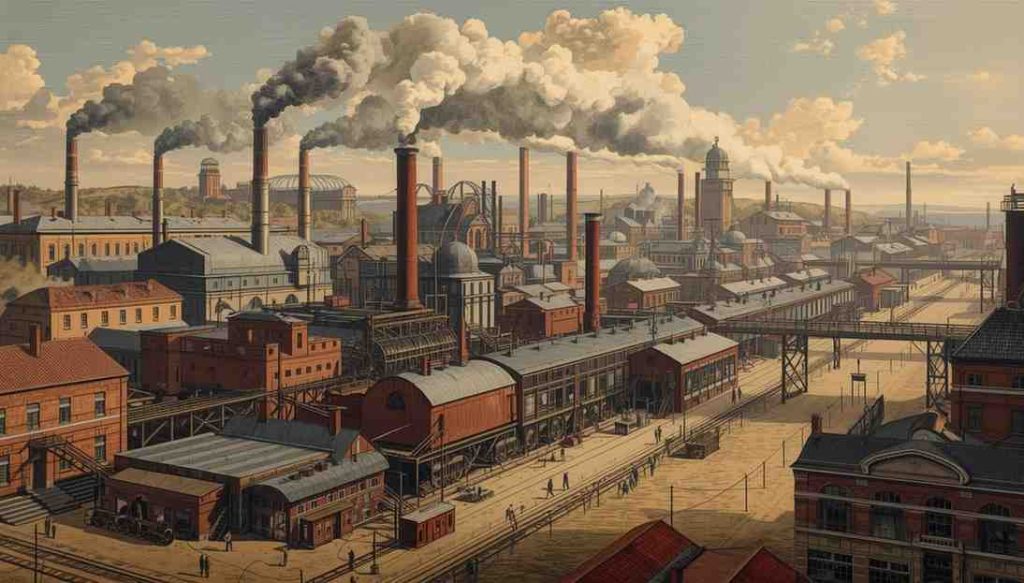
Think about it: back in the 1800s, folks probably freaked out when steam engines started chugging along, powering factories and changing everything from farming to travel. Sound familiar? Today, we’re staring down the barrel of AI doing something similar—shaking up jobs, economies, and how we live day to day. The future of AI isn’t some sci-fi dream; it’s happening now, and looking at that old steam-powered shake-up can give us some real clues on how to handle it. I’ve dug into history a bit, and yeah, there are parallels that make you pause. It’s not all doom and gloom, though—there’s excitement mixed in with the worries.
Table of Contents
- The Steam Engine Revolution: A Quick Look Back
- How It All Started
- Major Impacts on Society and Economy
- Drawing Parallels Between Steam Power and the Future of AI
- Key Similarities in Disruption
- Notable Differences to Consider
- Lesson 1: Jobs Will Shift, But New Opportunities Pop Up
- Lesson 2: Watch Out for Growing Inequality
- Lesson 3: Productivity Will Skyrocket—Eventually
- Lesson 4: Education and Policies Help Society Adapt
- Lesson 5: Tackle Ethical Issues Head-On
- Lesson 6: One Innovation Sparks a Chain Reaction
- Lesson 7: Embracing Change Leads to Long-Term Wins
The Steam Engine Revolution: A Quick Look Back
You know, the steam engine didn’t just appear out of nowhere. It built on ideas from earlier tinkerers, but James Watt’s tweaks in the late 1700s really kicked things into gear. Suddenly, factories could run without relying on rivers for water power, and that meant big changes everywhere.
How It All Started
It all revved up around 1760 in Britain, with water wheels giving way to steam. Machines like the power loom transformed textiles—stuff that used to take days now got done in hours. But it wasn’t smooth sailing; early engines were clunky, expensive, and sometimes exploded. Still, folks saw the potential and ran with it, spreading to railroads and ships by the mid-1800s.
Major Impacts on Society and Economy
Man, the ripple effects were huge. Cities ballooned as people left farms for factory jobs—think rural folks suddenly crammed into urban slums. Economies boomed with cheaper goods, but at a cost: child labor, long hours, pollution. According to historians, productivity in textiles jumped by factors of 40 or more in some cases. Yet, it took decades for wages to catch up, and that’s where the Luddites come in—workers smashing machines because they felt threatened. Sound like today’s AI fears? Yeah, a bit.
Drawing Parallels Between Steam Power and the Future of AI
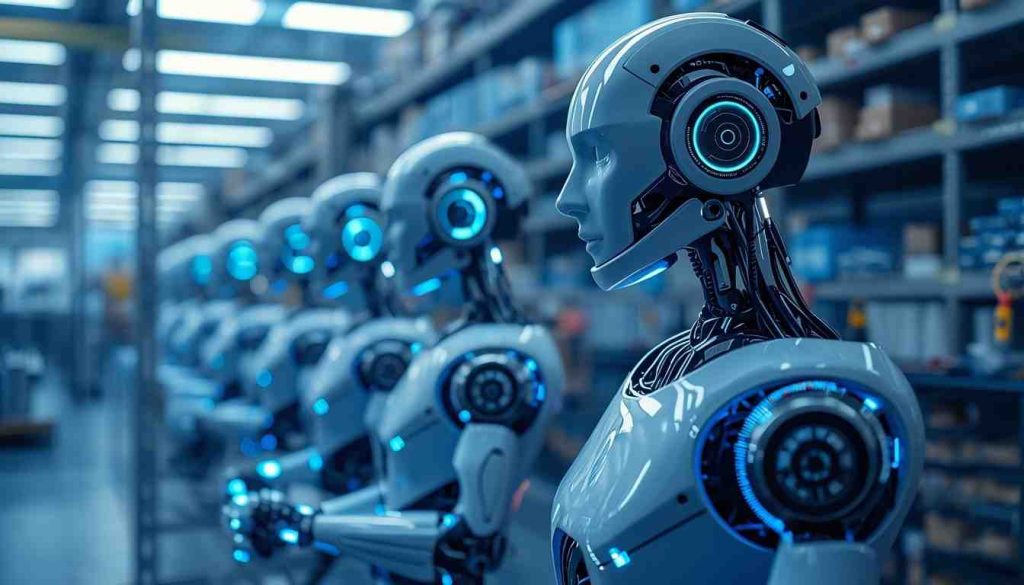
Okay, so why connect dots between coal-fired beasts and sleek algorithms? Both are game-changers, what experts call general-purpose technologies. They don’t just fix one problem; they reshape whole industries.
Key Similarities in Disruption
Both kick off with hype and fear. Steam displaced artisans; AI might nudge out coders or analysts. Economic growth follows, but unevenly—factory owners got rich first, just like tech giants today hoarding AI gains. Social shifts too: urbanization from steam, maybe remote work explosions or digital divides from AI. And let’s not forget, both need infrastructure—railroads for steam, data centers and broadband for AI.
Here’s a quick table comparing the two:
| Aspect | Steam Engine Revolution | Future of AI |
|---|---|---|
| Core Innovation | Mechanical power from steam | Cognitive processing from algorithms |
| Job Impact | Displaced farmers/artisans; created mechanics | May displace routine tasks; creates AI specialists |
| Economic Boost | Scaled production, global trade | Efficiency in services, new industries |
| Societal Challenges | Inequality, urban overcrowding | Privacy concerns, job inequality |
| Timeline | Decades to fully integrate | Faster pace due to digital spread |
Notable Differences to Consider
AI moves way faster—steam took generations to globalize, but AI updates hit worldwide in days. Plus, steam was about physical muscle; AI’s tackling brainpower, which feels more personal. That said, AI could amplify human smarts, not just replace them, if we play it right.
Lesson 1: Jobs Will Shift, But New Opportunities Pop Up
Remember how weavers turned into machine operators? Same vibe with AI. Sure, some roles vanish—think data entry or basic coding. But new ones emerge, like prompt engineers or AI ethicists. I’ve seen this in my own circle; a buddy who was a graphic designer now trains AI models, and he’s busier than ever. History shows employment actually grew post-revolution, from 10 million industrial jobs in 1800 to way more by 1900. For the future of AI, it’s about reskilling—don’t fight the machines, learn to work with them.
For more on how jobs evolved during big tech shifts, check out this history of industrial revolutions.
Lesson 2: Watch Out for Growing Inequality
Without checks, winners take all. Factory barons like Carnegie amassed fortunes while workers struggled. Today, AI could widen gaps if only big corps afford the tech. Research suggests early industrial wealth concentrated, leading to unrest—think strikes and reforms. For AI’s future, we might need policies like universal basic income or profit-sharing to spread the wealth. It’s not inevitable; it’s a choice.
Lesson 3: Productivity Will Skyrocket—Eventually
Steam boosted output massively—cotton spinning went up 500 times per worker. But it didn’t happen overnight; factories had to redesign around the tech. AI’s similar: we’re in the lag phase now, but once integrated, expect huge leaps in fields like healthcare or finance. A quote from economist Robert Gordon nails it: “The steam engine allowed transport and manufacturing; AI is that but for cognition.” Patience is key here.
Lesson 4: Education and Policies Help Society Adapt
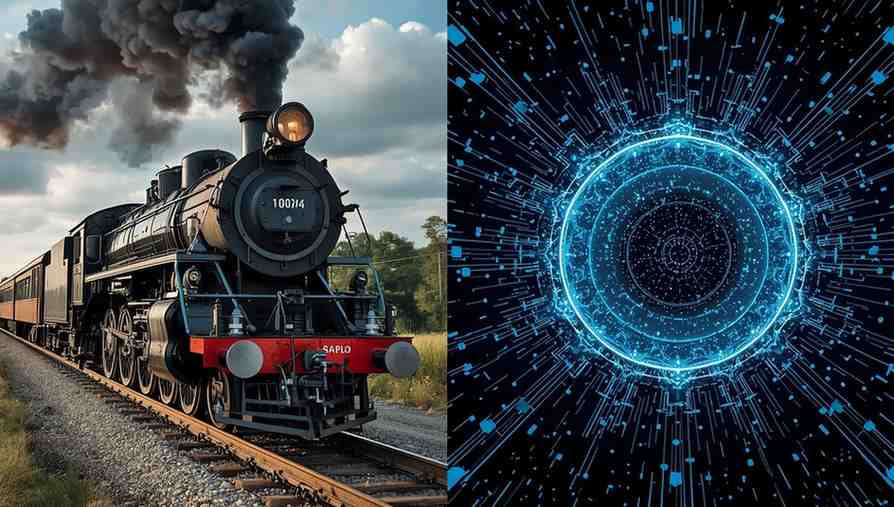
Back then, public schools popped up to train industrial workers, and laws curbed child labor. We adapted. For the future of AI, lifelong learning’s crucial—think online courses on AI basics. Governments stepped in with regulations; we might need the same for AI bias or data privacy. It’s messy, but it works if we push for it.
Lesson 5: Tackle Ethical Issues Head-On
Steam brought pollution and exploitation; we ignored it at first, then fixed with laws. AI’s got its own baggage—bias in algorithms, surveillance creeps. Drawing from history, address this early. I’ve thought about how facial recognition could go wrong in everyday life, like misidentifying people in crowds. Build trust by being transparent.
Want deeper dives into AI ethics? Head over to our guide on ethical AI practices.
Lesson 6: One Innovation Sparks a Chain Reaction
Steam led to railroads, which spurred steel, then electricity. AI could birth new fields like personalized medicine or smart cities. It’s a domino effect—embrace it, and the future of AI becomes a launchpad for more breakthroughs.
To see this in action, check out this YouTube video on why AI might be bigger than the industrial revolution: VIDEO. It’s a quick watch with some mind-bending ideas.
Lesson 7: Embracing Change Leads to Long-Term Wins
The Luddites lost because they resisted; adapters thrived. Same for AI—fear it, and you fall behind; lean in, and opportunities open. History’s full of folks who pivoted and prospered. For the future of AI, stay curious, experiment a little. I’ve tried AI tools for simple tasks, and it’s saved me hours—small wins add up.
As we wrap this up, it’s clear the steam engine didn’t end the world; it remade it better in many ways, despite the bumps. The future of AI holds similar promise—if we learn from the past, we can steer it toward good. It’s exciting, a bit scary, but mostly full of potential. What do you think—ready to jump in?
Key Takeaways
- Job Evolution: Expect shifts, but history shows more jobs overall in the long run.
- Inequality Risks: Act early with policies to share AI benefits widely.
- Productivity Gains: Big boosts coming, but patience during the transition.
- Adaptation Tools: Education and regs smoothed steam’s path; same for AI.
- Ethical Focus: Address issues like bias upfront to build trust.
- Innovation Chain: AI will spark new tech waves, just like steam did.
- Embrace Mindset: Resistance flops; adaptation wins in tech revolutions.
FAQ
What can the steam engine teach us about job losses in the future of AI? Well, back then, machines wiped out some old jobs but created tons of new ones, like engineers. AI might do the same—displace routine work but open doors for creative roles. It’s not all bad if we train up.
How might inequality play out in the future of AI, based on the 19th century? Steam made a few folks super rich while others struggled. AI could amplify that if tech giants hog the gains. But with smart policies, like taxing AI profits for public good, we can even it out.
Is the future of AI going to boost productivity like the steam engine did? Absolutely, though it might take time. Steam ramped up output hugely once factories adapted. AI could do that for brainy tasks, making everything from design to research faster.
What role does education have in preparing for the future of AI? Huge one—industrial times saw schools boom to skill workers. Today, we need AI literacy programs so people aren’t left behind. It’s about lifelong learning, really.
Are there ethical lessons from the steam revolution for AI’s future? Yeah, ignoring worker exploitation led to backlash then. For AI, we gotta tackle privacy and bias early to avoid similar messes.
How fast will changes in the future of AI happen compared to steam? Way quicker—steam took decades to spread; AI’s digital, so it zips global in months. That means we adapt faster or risk bigger disruptions.
Key Citations
- Tompkins Ventures on AI Industrial Revolution
- LinkedIn Article on Lessons from First Industrial Revolution
- Functionly on Lessons for AI Integration
- Forbes on Steam to Silicon
- Mogel on Evolution of Work and EdTech
- Medium on From Steam to AI
- Valere on History’s Lesson for AI
- Oxford Review on AI as GPT
- Navikenz on AI Creating Jobs
- Jérôme Schmidt on Technological Revolutions